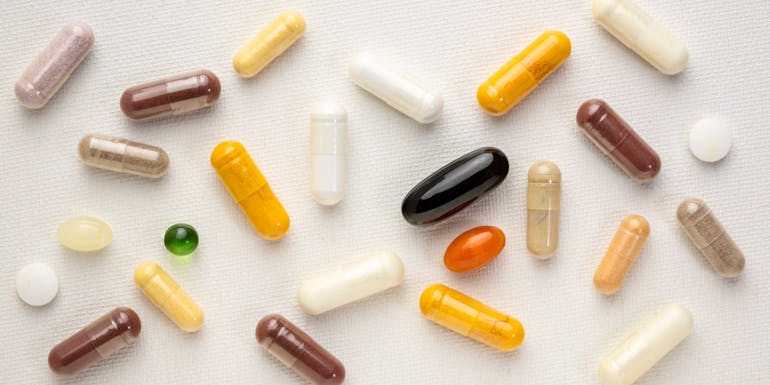
Bromelain
Bromelain is the name given to a group of protein-digesting enzymes naturally found in pineapple (Ananas comosus), particularly in the fruit and stem. Bromelain has a long history of use as a digestive enzyme and has also attracted scientific interest for its potential effects on inflammation, tissue swelling and other biological processes.
More recently, bromelain has appeared in discussions around metabolism and weight management. Laboratory and animal studies have produced some interesting findings relating to fat cells, lipid metabolism and inflammation associated with obesity. However, these findings have not yet translated into convincing evidence that bromelain supplements cause weight loss in humans. Bromelain should therefore not be considered a weight-loss treatment or a substitute for dietary changes, physical activity or evidence-based weight-management care.
Key Facts
- Bromelain is a mixture of proteolytic, or protein-digesting, enzymes obtained from pineapple.
- Commercial bromelain supplements are commonly produced using enzymes extracted from the pineapple stem.
- Bromelain has been researched for a range of potential uses, including digestive support, inflammation, pain and swelling.
- Laboratory research suggests bromelain may influence the development and metabolism of fat cells, but these findings do not demonstrate weight loss in humans.
- Studies in mice fed high-fat diets have reported effects on body weight, fat tissue and liver lipid metabolism. Animal findings cannot be assumed to have the same effect in people.
- There is currently insufficient clinical evidence to establish bromelain as an effective weight-loss supplement.
- Bromelain can cause digestive side effects and allergic reactions in some people and may be unsuitable alongside medicines that affect blood clotting.
- Sustainable weight management still depends primarily on overall energy intake, diet, physical activity, sleep and other individual health factors.
Medino Recommends

Nature's Aid Ginger, Turmeric & Bromelain 60 Tablets
Nature's Aid combines bromelain with ginger and turmeric in a multi-ingredient botanical formula. Each tablet provides 100mg of bromelain alongside the equivalent of 500mg ginger root and 500mg turmeric root. It is suitable for vegetarians and vegans.

Cytoplan Cyto-Zyme Digestive Enzyme 545mg 60 Capsules
Cytoplan Cyto-Zyme provides 100mg of bromelain per capsule alongside a range of other digestive ingredients, including lipase, protease, amylase, papain, lactase, cellulase and betaine hydrochloride.

Lamberts Digestizyme Plant-Sourced Enzymes 100 Capsules
Lamberts Digestizyme combines bromelain with several other plant-sourced digestive enzymes, including amylase, protease, lipase, cellulase, glucoamylase and papain. It is designed to support the breakdown of different components of food and is suitable for vegetarians and vegans.
FAQs
What does the research say about Bromelain and its effects on the body?
Bromelain has been studied for several possible biological effects. As a proteolytic enzyme, it breaks down proteins, which explains its established use in digestive-enzyme products. Research has also examined its potential effects on inflammatory processes, swelling, pain and blood clotting.
A 2023 systematic review and meta-analysis assessed clinical studies of bromelain across a range of health conditions. It found some evidence for effects in areas including pain management and wound care, but it did not establish bromelain as a treatment for weight loss or obesity.
Research specifically relating bromelain to body fat and metabolism is much less developed and is largely preclinical.
For example, laboratory research using fat cells found that stem bromelain influenced adipocyte differentiation and pathways involved in fat storage and breakdown. Studies in mice fed high-fat diets have also reported changes in body-weight gain, white adipose tissue and liver fat metabolism.
These findings are useful for identifying possible mechanisms to study, but cell cultures and mice are very different from people. Clinical trials would be needed before these effects could be considered evidence that bromelain helps people lose weight.
Can Bromelain help with weight loss?
There is currently not enough human clinical evidence to say that bromelain reliably helps people lose weight.
Interest in bromelain for weight management comes mainly from laboratory and animal studies. In one mouse study, bromelain reduced some of the increases in body weight and white adipose tissue associated with a high-fat diet. Other experimental research suggests bromelain may influence pathways involved in fat-cell development and lipid metabolism.
However, an effect in mice or isolated cells does not establish an effective treatment in humans. Human metabolism, diet, behaviour and obesity are considerably more complex.
Bromelain should therefore not be described as a fat burner or a proven weight-loss supplement. Taking bromelain does not guarantee that you will lose weight.
How might Bromelain potentially influence weight management?
Researchers have proposed several possible mechanisms, although most remain experimental.
Laboratory research suggests bromelain may affect the process through which precursor cells develop into mature fat cells, known as adipogenesis. It has also been associated experimentally with changes in pathways involved in lipolysis, which is the breakdown of stored fat.
Animal research has investigated bromelain's effects on liver lipid metabolism. One study in mice fed a high-fat diet found changes in pathways involved in fatty acid uptake, cholesterol metabolism and fatty acid oxidation. Further research has examined signalling involving AMPK, an enzyme involved in cellular energy regulation.
Bromelain is also studied for its anti-inflammatory activity. Because obesity is often associated with chronic low-grade inflammation, researchers have investigated whether these effects could have relevance to metabolic health.
These mechanisms are scientifically interesting, but none demonstrates that taking a bromelain supplement will result in meaningful weight loss in people.
Does Bromelain burn fat?
There is no good clinical evidence that bromelain directly burns body fat in humans.
Laboratory studies have reported effects on mature fat cells and processes involved in fat metabolism, while studies in mice have found changes in fat accumulation and metabolic pathways.
Describing bromelain as a fat burner would therefore go beyond the available evidence. Human trials measuring body weight, body composition and long-term outcomes would be needed to determine whether these experimental findings have practical relevance.
Does Bromelain reduce appetite?
There is currently insufficient evidence to establish bromelain as an appetite suppressant.
The proposed weight-related mechanisms studied for bromelain generally concern fat-cell biology, inflammation and lipid metabolism rather than a demonstrated reduction in hunger or calorie intake in humans.
Anyone using bromelain should therefore not expect it to reliably reduce appetite or food intake.
How is Bromelain traditionally used?
Pineapple has a long history of use as both a food and in traditional health practices. Bromelain itself became the subject of increasing medical research after scientists began isolating and studying the pineapple's proteolytic enzymes.
Modern bromelain supplements are generally marketed for purposes such as digestive support or as part of formulations intended to support joints, recovery or inflammatory processes.
Its association with weight management is much more recent and is based largely on experimental research rather than established traditional use or strong clinical evidence.
How to consume or supplement Bromelain?
Bromelain can be obtained naturally from pineapple, although eating pineapple is not equivalent to taking a concentrated bromelain supplement.
Supplements are commonly available as tablets or capsules, either as bromelain alone or combined with ingredients such as digestive enzymes, turmeric or quercetin.
There is no established dose of bromelain for weight loss because bromelain has not been proven to be an effective weight-loss treatment.
When using a supplement, follow the manufacturer's recommended dosage rather than attempting to copy doses from experimental studies. People taking regular medication or managing an existing health condition should speak to a pharmacist, GP or other healthcare professional before starting bromelain.
Are there any known side effects or precautions when using Bromelain?
Bromelain appears to be reasonably well tolerated in many clinical studies, but side effects are possible.
Reported effects include digestive symptoms such as nausea, diarrhoea and flatulence, as well as headaches in some studies. Allergic reactions can also occur. Particular caution may be appropriate for people who are allergic to pineapple.
Bromelain can affect processes involved in platelet aggregation and blood clotting. Although the clinical significance of these effects is not fully established, caution is advisable for people taking anticoagulant or antiplatelet medicines or those with conditions that increase their risk of bleeding.
Safety information during pregnancy and breastfeeding is limited, so concentrated bromelain supplements should only be used during these periods following advice from an appropriate healthcare professional.
How long does it take to see weight-loss benefits from Bromelain?
There is no established timeframe in which bromelain can be expected to produce weight loss.
Human research has not demonstrated a consistent weight-loss effect from bromelain supplementation, so it would be misleading to suggest that taking it for a certain number of days or weeks will result in a particular change in body weight.
If bromelain is being taken for another purpose, follow the individual product instructions and assess its suitability with a healthcare professional where appropriate.
For weight management, progress is better assessed through sustainable changes in nutrition, physical activity and other health behaviours rather than expecting a bromelain supplement to produce weight loss within a set period.
What should I look for when purchasing Bromelain supplements?
Bromelain products can be difficult to compare based on milligrams alone because enzyme supplements may also state their enzymatic activity.
Measurements such as GDU, or Gelatine Digesting Units, describe the enzyme's protein-digesting activity. Two products containing the same number of milligrams of bromelain may therefore not necessarily provide the same level of enzymatic activity.
Look for a reputable manufacturer that provides clear information about the quantity or activity of bromelain, suggested dosage, additional ingredients and relevant warnings.
It is also worth checking whether bromelain is the primary ingredient or part of a combination formula. Products containing digestive enzymes, turmeric, quercetin or other ingredients may have different intended uses and precautions.
Can I take Bromelain alongside weight-loss medication?
If you are using prescribed weight-management medication, speak to your prescriber or pharmacist before adding bromelain or another dietary supplement.
There is not good evidence showing that bromelain enhances the weight-loss effects of prescription treatments, and supplements should not be used as a replacement for prescribed medication.
A pharmacist or prescriber can also check for potential interactions with your other medicines and assess whether a bromelain-containing product is appropriate for you.
Sources
- Efficacy and safety of bromelain: A systematic review and meta-analysis - PubMed
- Bromelain in Obesity Therapy: A Review of Anti-Inflammatory and Metabolic Mechanisms - PubMed
- Inhibition of adipogenesis and induction of apoptosis and lipolysis by stem bromelain in 3T3-L1 adipocytes - PubMed
- Bromelain Confers Protection against the Non-Alcoholic Fatty Liver Disease in Male C57BL/6 Mice - PubMed
- Potential health benefits of bromelain: a critical review of the current literature - PMC