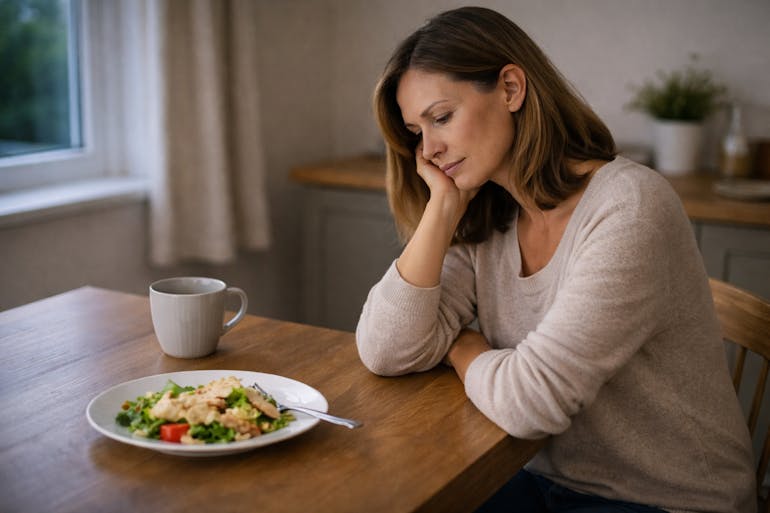
Food Grief: Mourning the Loss of Comfort Eating on GLP-1 Medications
Many people begin GLP-1 medication expecting physical changes: less hunger, fewer cravings, steady weight loss. What some don’t expect is an emotional absence — a quiet where food used to sit.
For years, food may have been more than nourishment. It may have offered comfort after a hard day, excitement to look forward to, or relief from stress and anxiety. When that relationship changes quickly, the result can feel less like freedom and more like loss.
This experience has become common enough that many people now describe it as food grief — a form of mourning for comfort eating that no longer works the way it once did.
This article explores why food grief happens, why it can feel surprisingly intense on Mounjaro and other GLP-1 medications, and how people gradually adapt to a quieter relationship with food.
Food grief is not a clinical diagnosis and the experiences described here are based on self-reported accounts, not established evidence; emotional responses to GLP-1 medications vary widely, and some people may experience persistent low mood or emotional changes that require professional support rather than naturally resolving over time.
"I Didn’t Expect to Miss Food This Much"
For many, the realisation arrives quietly. Weight loss is happening. Hunger is manageable. And yet, something feels wrong.
"I thought I’d be happy not thinking about food all the time. Instead, I just feel sad about it." — u/SoftLanding
This sadness can be confusing. After all, the treatment is doing exactly what it’s meant to do. But emotional reactions don’t always follow logic. Losing something that once brought comfort — even if it also caused harm — can still hurt.
"I didn’t expect to grieve food like this." — u/QuietFork
Many people describe feeling unprepared for this emotional shift, especially when clinicians and conversations focus mainly on physical outcomes.
When Food Was More Than Hunger
To understand food grief, it helps to recognise the role food often played before treatment.
For many people, eating wasn’t just about hunger. It was a reward after work, a coping mechanism during stress, a reliable source of pleasure, or a way to feel soothed when emotions were overwhelming.
"Food was my reward, my comfort, my stress relief." — u/EatToCope
Food also carries identity. Cooking, baking, planning meals, and sharing food with others can be creative outlets and social glue.
"I loved cooking and thinking about food. It was part of who I was." — u/KitchenIdentity
When appetite and interest in food drop suddenly, it can feel like losing a familiar part of daily life — not just a habit, but a piece of self.
The Loss of Food Noise — and What Replaces It
One of the most celebrated effects of GLP-1 medications is the loss of food noise — the constant mental chatter about what to eat, when to eat, and how much.
For some, this silence is a relief. For others, it leaves a gap.
"The food noise is gone, but now there’s just… emptiness." — u/EmptyPlate
Food noise often filled downtime, softened boredom, or distracted from difficult thoughts. When it disappears, those moments can feel stark. Some people describe restlessness, emotional flatness, or a sense that something enjoyable has been taken away.
This doesn’t mean the medication is wrong. It means the brain is adjusting to a sudden change in how it receives comfort and stimulation.
"It Feels Like Grieving an Old Friend"
Many people instinctively describe the experience using the language of grief.
"It honestly feels like grieving an old friend." — u/GoodbyeSnacks
There can be sadness, nostalgia, and even a sense of longing — not for overeating, but for the feelings food once provided.
"I don’t crave food — I miss it." — u/MissNotCrave
This distinction matters. Food grief isn’t about wanting to return to harmful patterns. It’s about mourning the loss of a coping mechanism that once helped someone get through difficult moments.
Like any grief, it can come in waves and feel out of proportion to outsiders — but that doesn’t make it any less real.
Why This Can Feel Like Depression (Even When Weight Loss Is Going Well)
Some people worry that food grief means they’re becoming depressed. The feelings can overlap: low mood, loss of interest, emotional flatness.
"I’m losing weight, but I feel flat and low. It scared me." — u/IsThisNormalMJ
What makes food grief particularly confusing is that it happens alongside positive physical changes. Friends may congratulate weight loss while the person experiencing it feels quietly sad.
"How do you explain that you’re sad because food doesn’t comfort you anymore?" — u/HardToExplain
In many cases, this isn’t clinical depression — it’s an adjustment period. When a long-standing source of dopamine and comfort disappears, the brain needs time to recalibrate. That recalibration can feel uncomfortable, especially if food was a primary emotional outlet.
Social Food, Travel, and Celebrations Feel Different Now
Food grief often becomes most noticeable in social situations.
Meals out, holidays, and celebrations are built around shared eating. When interest in food fades, those moments can feel strangely hollow.
"Going out to eat used to be the highlight of my week. Now it feels pointless." — u/ChangedOutings
Some people describe a desire to enjoy food again — not because they’re hungry, but because they want to participate emotionally.
"I want to want the food, but I just don’t." — u/WantToWant
This can create a quiet sense of disconnection, even when social relationships remain supportive. Food is still there — but the emotional pull has changed.
Some People Find New Joy — Others Just Find Peace
Not everyone experiences food grief in the same way or for the same length of time.
Some people eventually rediscover enjoyment in food, just in smaller portions or with different priorities.
"I enjoy food again — just smaller amounts and better quality." — u/NewRelationshipWithFood
Others don’t regain strong pleasure from eating — and feel content with that.
"Food feels neutral now, and honestly, that’s kind of peaceful." — u/CalmEater
Neither response is more correct. For some, joy returns in a different form. For others, neutrality feels like relief from years of obsession. What matters is allowing space for individual adaptation rather than forcing a particular emotional outcome.
What Actually Helps During Food Grief
There’s no quick fix for food grief, but people who’ve been through it often share similar insights.
The first is permission.
"I had to let myself feel sad about it instead of fighting it." — u/LetItBe
Trying to dismiss the grief because weight loss is "a good thing" often makes it linger. Acknowledging the loss allows it to soften over time.
Replacing rituals — not emotions — also helps.
"I replaced my evening snacks with a walk or a bath." — u/NewRituals
Food often structured evenings, weekends, and self-care routines. Creating new rituals can meet the same emotional needs without forcing enjoyment of food that no longer feels natural.
Time and dose stability matter too.
"It got easier once my dose stabilised and I stopped expecting food to feel the same." — u/SettledDose
For many, food grief eases as the brain adjusts and new sources of comfort take root.
Pharmacist Perspective: Why Food Grief Happens on GLP-1s
"GLP-1 medicines reduce hunger and also change how rewarding food feels in the brain. For many people, food wasn’t just fuel — it was a source of comfort, routine, and emotional relief. When that reward drops away quickly, it’s common to feel a sense of loss before new coping strategies have had time to form. Food grief doesn’t mean something has gone wrong with treatment; it reflects the mind adjusting to a quieter, less emotionally driven relationship with eating, which often takes longer than the physical changes." — Alessandro Grenci, Superintendent Pharmacist
Living Well Without Comfort Eating
Over time, many people find that food grief gives way to something steadier.
"I realised I needed new ways to comfort myself." — u/FindingOtherWays
Pleasure doesn’t disappear — it redistributes. Some people find joy in movement, creativity, connection, or simply feeling more at ease in their body. Others value the calm that comes from not negotiating with food constantly.
The relationship with eating becomes less dramatic, less loaded, and less central — which can feel strange after years of reliance.
Conclusion: Missing Food Doesn’t Mean You Made the Wrong Choice
Food grief doesn’t mean treatment has failed. It means something meaningful has changed.
"I miss food, but I don’t miss how it controlled me." — u/TwoTruths
For most people, the sadness fades gradually — not because food becomes exciting again, but because life fills in around it.
"It took time, but I don’t feel that sadness anymore." — u/OnTheOtherSide
Missing comfort eating doesn’t mean you’re weak, ungrateful, or doing something wrong. It means you’re adjusting to a new way of meeting emotional needs — one that often leads to a calmer, more balanced relationship with food.
Food grief isn’t failure. It’s transition.
