Hair Regrowth After Mounjaro Hair Loss: Timeline and Expectations
Hair loss is one of the most emotionally challenging side effects people report while taking Mounjaro. It often arrives suddenly, feels out of proportion to everyday shedding, and can create a sense of urgency or fear-especially for those who have always had thick, reliable hair. Many describe the experience as alarming: clumps in the shower, visible thinning around the hairline, or ponytails that suddenly feel half their usual size.
Despite how distressing it can be, the pattern that emerges from user reports is surprisingly consistent. Hair loss tends to appear a few months after starting the medication or after significant changes in weight, appetite, or nutrition. It can last for several months, and for most people, it gradually slows and eventually reverses. Importantly, reports suggest that stopping the medication does not immediately halt shedding; the process seems tied to the body’s broader adjustment rather than the dose taken that week.
This article explores the timelines people describe, the patterns of regrowth they notice, and how expectations evolve as hair cycles reset. While each person’s experience is unique, the shared stories offer clarity, reassurance, and a sense of what "normal" can look like, especially during the difficult middle phase between shedding and recovery.
When Hair Loss Starts and How Long It Lasts
One of the most striking themes from users is the delay between starting Mounjaro and seeing hair loss. Many mention that shedding doesn’t begin until several months in, often coinciding with a period of rapid change-whether in appetite, weight, or general health.
Some people describe the initial shock clearly:
"How long have you been on Mounjaro? Hair loss follows approximately three months after its trigger and generally continues for a few months before resolving, and then your hair grows back over time." -anonymous
Others point out that their hair loss aligned closely with their weight-loss timeline rather than their medication schedule:
"It started visibly falling out 3 months after I started mounjaro… It took a further 4-5 months before I started seeing new growth." -Loud-Dot-7606
For some, the shedding phase can feel prolonged. A few describe months of continuous loss:
"Mine has still not stopped. It does seem to be growing back but the loss continues… It's really upsetting." -Foreign-Ad7028
Across accounts, the pattern appears cyclical: a triggering event, a delayed shedding phase, and eventually, regrowth as the hair cycle resets. This delay often means that even positive changes, like improved nutrition, may take time to show up in how the hair behaves.
What Regrowth Looks Like: Early Signs and Common Experiences
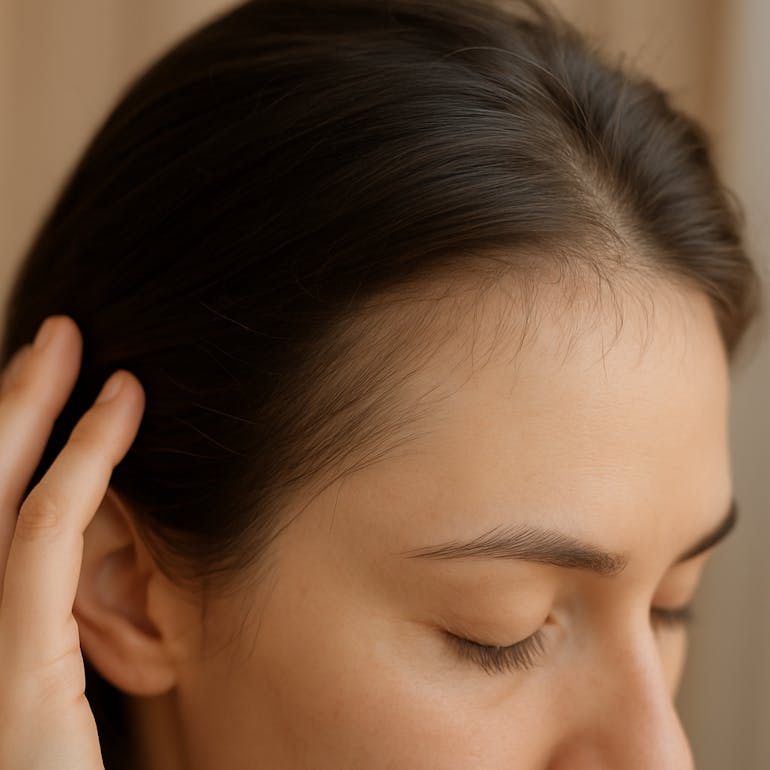
As distressing as shedding can be, many users report clear, visible regrowth once their system stabilises. These early signs often appear as short, fine "baby hairs" or uneven layers that emerge after weeks or months of heavier loss.
Some describe a noticeable shift once their weight or nutrition stabilised:
"Once the weight loss levelled out and became less drastic, the hair loss began to slow down as well." -zanyjanie
Others share encouraging stories of full recovery:
"My hair has grown back full and lush… then got right back to the usual thickness that I had to get a layered cut!" -404kindadead
For many, growth can feel uneven at first. It’s common to see multiple "layers" of hair at different lengths, reflecting the staggered timing of follicle recovery:
"I have so much new hair, I have thousands of one inch strands all standing to attention on my head." -Fun-Fox-5215
Some users find the regrowth period surprisingly positive, evidence that their body is, at last, resetting after months of stress or rapid change.
Patterns, Triggers, and Factors That Influence Shedding
While the exact cause of hair loss varies, user experiences point consistently toward a combination of internal factors rather than a single culprit. Reduced appetite, low protein intake, hormonal shifts, calorie deficits and the body’s adaptation to rapid changes all appear in their stories.
Some users attribute their shedding to inadequate nutrition:
"I’m worried that… I’m not getting the right nutrients and perhaps it’s causing my hair to fall out more?" -Nice-Distribution-75
Others found that improving protein intake directly influenced their hair’s behaviour:
"My hair STOPPED shedding once I started MJ and had to start prioritising protein... Since that is what hair is." -shaelii
Others highlight that their doctors explained the pattern as similar to well-known causes of temporary shedding:
"My doctor said the hair loss is similar to postpartum shedding… the body realizes it’s 'losing' weight and sheds everything, including hair." -MangyTalaxian
Across accounts, the timeline is remarkably consistent: shedding typically appears 2–4 months after the trigger, lasts for several months, and then transitions into regrowth as the body adjusts.
Pharmacist’s Comment
According to Sorin Romaniuc, Pharmacist at Medino, temporary hair shedding on GLP-1 medications is usually linked to the body adapting to rapid changes in appetite, weight and nutrition rather than permanent follicle damage.
"Hair loss on these medications is typically a form of telogen effluvium, a temporary shift in the hair cycle triggered by change, stress or reduced nutrition. It often appears months after the trigger and usually resolves as the body stabilises." -Sorin Romaniuc, Pharmacist at Medino
"Maintaining sufficient protein and calorie intake is important, even when appetite is low, as inadequate nutrition can prolong shedding or delay regrowth."
"People should seek medical advice if hair loss is severe, persists beyond a year without signs of regrowth, or is accompanied by other symptoms such as fatigue, scalp inflammation, or nutritional deficiencies."
Final Thoughts
Hair loss during Mounjaro treatment can be upsetting, unexpected and emotionally draining, especially when it coincides with a period of positive change in other areas of health. Yet the shared experiences of many users reveal a clear and reassuring pattern: shedding is usually temporary, and regrowth is common once the body adjusts to its new baseline.
For most people, the process unfolds gradually, first a period of loss, then shorter new hairs appearing around the temples or parting, and finally thicker layers returning over time. Some even find their hair eventually becomes fuller than before.
If you are experiencing hair loss, focusing on nutrition, monitoring your overall health and checking in with a clinician can help ensure you’re supporting recovery. And while patience is difficult when facing visible thinning, many people emphasise that improvement does come, often more reliably than expected.
Your experience is not unusual, and you are far from alone. Over time, as your system settles and regrowth begins, most people find their confidence returning along with their hair.
