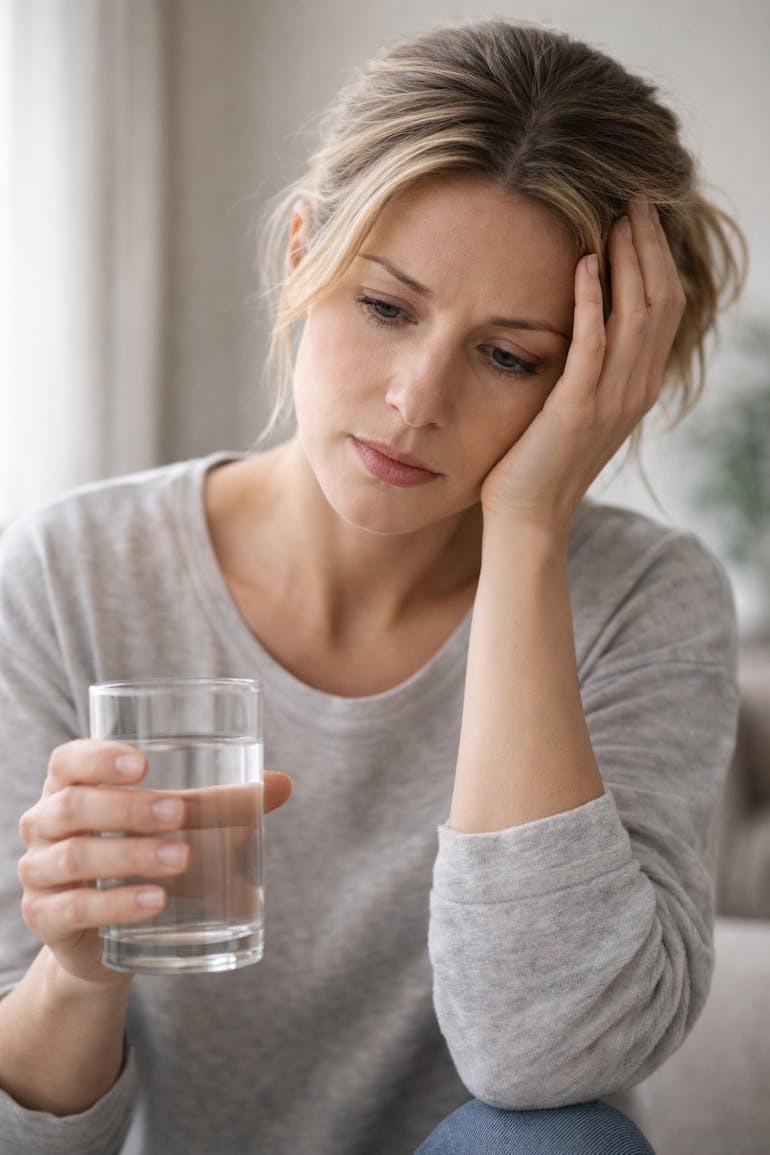
"Hanxiety" and Hangovers: Why Alcohol Can Hit So Differently on Mounjaro
For many people taking Mounjaro, alcohol simply doesn’t feel the same anymore. Some notice that they feel drunk much faster than they used to. Others find they barely feel a buzz at all, yet still wake up with a pounding headache, nausea, or a deep sense of anxiety the next day. And for a growing number of users, the desire to drink disappears almost entirely.
These changes can be surprising, especially when drinking habits haven’t changed. One or two drinks that once felt manageable may now lead to intense hangovers, stomach upset, or a wave of anxiety that lingers long after the alcohol has worn off.
This article is based on publicly shared personal experiences from online forums. These accounts are anecdotal, self-reported, and not independently verified. Individual reactions to alcohol and Mounjaro vary widely and may be influenced by factors such as diet, weight loss, hydration, mental health, or other medications.
This content is for informational purposes only and should not be taken as medical advice.
If alcohol has started to "hit differently" since beginning Mounjaro, you’re not imagining it.
"I Barely Drank - and Felt Awful"
For many users, the first clue comes from a night that should have been unremarkable. The amount of alcohol is modest. The setting is familiar. But the reaction is anything but.
"I had 3 ciders in 5 hours and I was so unwell. Throwing up and absolutely hammered." -u/beccaj130
People often describe a mismatch between how much they drank and how unwell they felt. What’s particularly unsettling is that the symptoms don’t always wait until the next morning.
"Each time it’s felt like a hangover kicked in within the hour." -u/Karazhan
Nausea, headaches, flushing, acid reflux, and sudden fatigue are commonly mentioned. For some, the experience is severe enough that they decide it simply isn’t worth repeating.
Hangovers That Feel Disproportionate
A recurring theme across user accounts is the intensity of hangovers. Even those who never struggled with hangovers before report feeling wiped out after very small amounts of alcohol.
"Personally, it gives me the worst hangovers of my life." -u/Chihiro1977
Night-time symptoms are common. People describe waking suddenly with thirst, headaches, or stomach pain.
"I woke up at 3am parched for water with a banging headache." -u/Karazhan
Others say the after-effects last far longer than expected.
"Even today my insides feel so bruised and sore." -u/beccaj130
For many, these experiences feel out of proportion to what they drank - and very different from anything they experienced before starting Mounjaro.
"Hanxiety": When Alcohol Triggers Anxiety
Beyond physical symptoms, a large number of users describe something more difficult to articulate: anxiety after drinking, often referred to online as "hanxiety".
This isn’t just mild nervousness. People report racing thoughts, restlessness, insomnia, and a sense of dread that can last well into the next day.
"I get the worst hangxiety when I drink on MJ." -u/bugga2k18
What’s striking is how little alcohol it can take to trigger these feelings.
"Even 1 beer is enough to have me up all night with stomach problems and super anxious." -u/bugga2k18
For some, the anxiety feels more distressing than the physical hangover. Several users say this emotional response is the main reason they’ve cut back or stopped drinking altogether.
Lost Buzz, Faster Intoxication - or Both
Another common paradox is how unpredictable alcohol feels on Mounjaro. Some people feel drunk much faster than before.
"It didn’t take much - just one drink - for me to feel buzzed." -u/Probably_forsure
Others describe the opposite: drinking without feeling much effect, followed by a sudden wave of intoxication later on.
"I was fine all night, then suddenly it’s like the alcohol hits all at once." -u/garry_lucas
This delayed effect can be particularly risky, as it makes it harder to judge when to slow down. Several users say they no longer trust their tolerance because there’s no gradual warning.
Some also report that alcohol simply doesn’t feel rewarding anymore.
"The buzz is negligible now, so it’s not even worth it." -u/OkCard611
This loss of pleasure is often paired with a stronger awareness of alcohol’s negative effects, which naturally reduces the desire to drink.
Why Might Alcohol Feel Different on Mounjaro?
There isn’t a single explanation, but several overlapping factors help explain why alcohol can feel stronger, harsher, or more anxiety-provoking on Mounjaro.
One commonly mentioned factor is delayed gastric emptying. Mounjaro slows how quickly food and drink leave the stomach, which can delay alcohol absorption - and then cause it to arrive all at once.
"It takes longer to feel the effects, so you don’t realise how much you’ve had." -u/teapigsfan
Reduced food intake also plays a role. Many people eat far less on Mounjaro, which lowers alcohol tolerance.
"Since I’m not eating much, it hits me so much faster." -u/Minimum-Society6220
Weight loss itself matters too. With a smaller body mass, the same amount of alcohol can lead to a higher blood alcohol concentration than before.
Blood sugar changes may contribute as well. Alcohol can lower blood glucose, and some users describe symptoms that feel similar to hypoglycaemia.
"Alcohol lowers blood glucose, as does Mounjaro." -u/WestClassic1441
Together, these factors can make alcohol feel less predictable and more physically and emotionally taxing.
Does Timing, Dose, or Drink Type Matter?
Many users notice patterns depending on when they drink, what dose they’re on, and what they choose to drink.
Some say alcohol feels more tolerable later in the week, further away from injection day.
"The only days I can do it are day 5–6 before my next jab." -u/CyndiWallauper
Dose increases are another common turning point. People who tolerated alcohol on lower doses often notice a clear change when moving up.
"I was okay on 2.5mg, but on 5mg I definitely noticed the difference." -u/jovi47
Drink type also seems to matter. Sugary drinks, beer, and cider are frequently blamed for worse symptoms.
"Beer just makes me feel ill now after a few." -u/teapigsfan
Spirits with low-sugar mixers are sometimes described as easier to tolerate, though experiences vary widely.
Weight Loss, Appetite, and the Day After Drinking
Some users notice that alcohol affects their weight-loss progress or appetite the following day. A few describe temporary stalls or feeling hungrier than usual.
"It pauses my weight loss and gives me super bad hangovers." -u/Outrageous_Basil2284
Others report feeling generally unwell or "off", even if they don’t have classic hangover symptoms.
"I feel sick the next day and just off." -u/Leather_Ad9065
For people who are working hard to change their relationship with food and alcohol, these effects can reinforce the feeling that drinking simply isn’t worth it anymore.
Is Alcohol Dangerous on Mounjaro?
Alcohol isn’t formally contraindicated with Mounjaro, but many users express concern about potential risks - particularly pancreatitis and gallbladder issues, which are already known considerations with GLP-1 medications.
"It increases your risk of pancreatitis." -u/AromaticFlight3028
Some people choose to avoid alcohol altogether as a precaution.
"Don’t drink and Mounjaro would be my advice." -u/Used-Shirt6176
At the same time, it’s important to acknowledge that experiences vary. A minority of users report little or no change in how alcohol affects them.
"For me, it’s the same as it was before." -u/Due-Freedom-5968
This variation is why awareness - rather than blanket rules - matters most.
What Users Say Helps (When They Do Drink)
For those who continue to drink occasionally, users often describe making small adjustments rather than giving up entirely.
Some avoid sugary drinks and pace themselves carefully.
"I stick to whisky and soda and avoid sugary drinks." -u/Nice1rodders
Hydration is another common theme.
"I spent the entire evening having pints of water." -u/Space-manatee
Others find that non-alcoholic alternatives make social situations easier without the after-effects.
"I’ve totally lost interest in drinking." -u/Fearless-Wishbone-33
Many say these changes happen naturally, without feeling forced or deprived.
Pharmacist Perspective: Why This Makes Sense
Alessandro Grenci, Superintendent Pharmacist at Medino, explains why these experiences aren’t surprising:
"Mounjaro affects appetite, digestion, blood sugar regulation, and reward pathways in the brain. Alcohol interacts with all of these systems. When food intake is lower and gastric emptying is delayed, alcohol can be absorbed differently, making its effects feel stronger or less predictable."
"For some people, alcohol also becomes less rewarding and more uncomfortable, which naturally reduces desire. If drinking causes significant side effects or anxiety, it’s sensible to reduce intake or avoid it altogether."
Conclusion: Not Just You - and Not Your Imagination
Across hundreds of shared experiences, one message comes through clearly: alcohol can feel very different on Mounjaro. Hangovers may be harsher. Anxiety may be stronger. The buzz may be weaker - or arrive all at once.
"It’s just not worth it anymore." -u/OkCard611
For some, that means cutting back significantly. For others, it means stopping altogether. And for a smaller group, alcohol continues to feel much the same as before.
"It’s not universal, but it’s definitely a thing." -u/BreathlessAlpaca
What matters most is awareness. Understanding that these reactions are being widely reported can help you make informed choices - without surprise, guilt, or confusion.
If alcohol feels different now, that doesn’t mean you’re doing anything wrong. It may simply mean your body is responding differently than it used to - and that’s something worth listening to.
