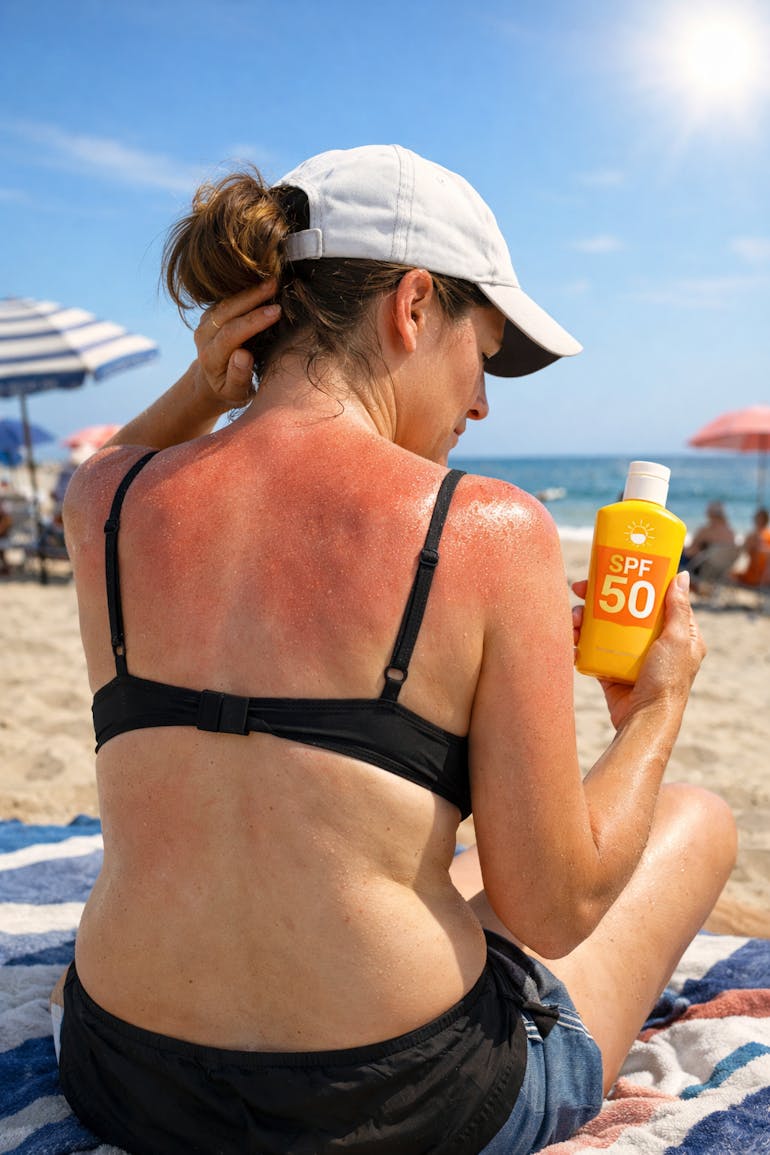
"I Burn Even With SPF 50": Why Sunscreen Sometimes Fails in Real Life
Sunscreen is widely promoted as one of the most important tools for protecting your skin from sun damage. Dermatologists recommend it, health campaigns emphasise it, and most of us know the basics: apply sunscreen before heading outdoors and choose a high SPF.
Yet despite these precautions, many people still find themselves dealing with a painful surprise at the end of the day -sunburn, even after using sunscreen.
Across online communities like Reddit and skincare forums, people frequently share stories of applying SPF carefully only to realise later that their shoulders, back, or legs have still turned red. Some describe this as confusing, while others feel frustrated or even embarrassed, wondering what they did wrong.
This article explores real experiences shared in public forums about burning despite sunscreen. While these stories don’t replace clinical research, they offer valuable insight into the everyday situations where sun protection seems to fail - and what people have learned from those experiences.
From application mistakes to misunderstandings about SPF itself, the reality is that sunscreen works best when it’s used correctly and combined with other protective habits.
Let’s look at what real users are saying.
"I Thought I Was Protected": Stories of Unexpected Sunburn
One of the most common themes in online discussions is the shock people feel when they realise they’ve burned despite trying to protect themselves.
Many describe situations where they felt confident they had done everything right - applying sunscreen, choosing a high SPF, and even reapplying throughout the day.
"I burned my entire back half of my body at the beach today. I was so careful and put on waterproof SPF 70 every two hours, but I guess the UV was just that strong." -u/More_Pothos
Others say that sunburn seems almost inevitable for them, even when they make an effort to apply sunscreen regularly.
"Every year without fail I end up getting a miserable burn, no matter how much sunscreen I put on or how often I apply it." -u/Kathrbkh
These experiences highlight an important reality: sunburn doesn’t always mean someone ignored sun protection advice. In many cases, people genuinely believed they were protected.
Often, it’s only later - when the redness appears - that they start to question what went wrong.
For some, the burns happen during holidays in sunny climates. For others, it happens during everyday activities like swimming, hiking, or even sitting outdoors on a mild day.
The common thread is the same: sunscreen was used, but the result wasn’t what they expected.
The Application Problem: Most People Use Too Little
One of the most frequently discussed reasons for sunscreen failure is surprisingly simple: most people don’t apply enough.
Even when someone believes they are using a generous amount, it’s often far below the level used in laboratory testing that determines SPF ratings.
"Make sure you use about a shot glass full for your entire body. Most people just don’t apply enough or reapply often enough." -u/glass_plants
When sunscreen is applied too thinly, the effective SPF drops dramatically. For example, applying half the recommended amount can reduce protection far more than many people realise.
Another common issue is missing areas of the body entirely.
"I apply sunscreen everywhere but I always end up missing some tiny spot that burns." -u/maraq
Commonly forgotten areas include:
- the tops of ears
- the back of the neck
- the scalp along hair partings
- the tops of feet
- behind the knees
These spots can easily burn even when the rest of the body is protected.
Many people say they only realised how little sunscreen they were using after seeing educational videos or reading advice online. Once they began applying larger amounts, some reported fewer burns.
But quantity isn’t the only factor.
Timing and consistency also matter.
The Reapplication Issue: Protection Fades Faster Than People Expect
Another reason sunscreen sometimes appears to "fail" is that its protective film gradually breaks down over time.
Even water-resistant sunscreens don’t last indefinitely.
"Reapplication is the key. Every hour, on the hour, apply again all over your whole body as if it was the first time." -u/sakamyados
Many users say they applied sunscreen once in the morning and assumed it would protect them all day.
In reality, several factors can reduce sunscreen’s effectiveness:
- sweating
- swimming
- towel drying
- rubbing against clothing
- natural skin oils
-u/imnosuperfan
Beach holidays are a common example. A person might apply sunscreen before leaving their hotel, then spend hours in the sun swimming, walking, and relaxing.
By mid-afternoon, the original sunscreen layer may have worn off significantly - even if the person doesn’t notice.
This is why many experts recommend reapplying sunscreen every two hours, and more often after swimming or heavy sweating.
Still, remembering to do this consistently can be difficult in real-life situations.
Water, Sweat, and Movement: When Sunscreen Breaks Down
Even when sunscreen is applied correctly, certain activities make it much harder to maintain protection.
Swimming, sports, and hot weather can all cause sunscreen to wear away more quickly.
"It’s very difficult to not burn in direct sun even with frequent sunscreen reapplication." -u/cassettinna
For people who spend long periods outdoors - such as at the beach or hiking - maintaining a perfect sunscreen layer throughout the day can be challenging.
Sweat alone can gradually reduce sunscreen coverage, especially during hot weather.
Water exposure creates an additional challenge.
Although many sunscreens are labelled "water resistant," this usually means protection lasts 40 or 80 minutes in water, not indefinitely.
"Anything that involves water or sweat can make sunscreen come off faster than people think." -u/imnosuperfan
After swimming, drying off with a towel can remove much of the sunscreen from the skin.
If it isn’t reapplied immediately, sunburn can develop surprisingly quickly - especially during peak UV hours.
This is why many sun safety guidelines recommend combining sunscreen with other forms of protection, such as shade, clothing, and hats.
The "High SPF Myth": Why SPF 50 Still Isn’t Bulletproof
Another common misunderstanding is the idea that higher SPF numbers provide complete protection.
Many people assume that using SPF 50 means they are essentially immune to sunburn.
But in reality, no sunscreen blocks 100% of ultraviolet radiation.
"Even with factor 50 sunscreen I still got burnt after being outside for hours." -u/rbsudden
Even small percentages of UV exposure can accumulate during long periods in strong sunlight.
"No sunblock is 100% when you're out for prolonged hours." -u/Phillherupp
For example, SPF 50 filters out about 98% of UVB rays under ideal conditions. That remaining 2% may seem small, but over many hours of exposure it can still damage skin.
This effect becomes even more noticeable in places where the sun is stronger than people are used to - such as Mediterranean or tropical destinations.
Someone accustomed to mild UK sunshine may find that the same sunscreen routine isn’t enough when the UV index is significantly higher.
In other words, SPF helps reduce exposure, but it doesn’t eliminate it entirely.
Skin Type Matters: Why Some People Burn Extremely Easily
Another factor that appears frequently in user discussions is individual skin type.
Some people burn far more easily than others due to genetics.
"I have the complexion of a ginger but live in the tropics. Even with SPF 50 I will burn if I’m out long enough." -u/Kali711
People with very fair skin often describe burning quickly, sometimes within minutes of direct sun exposure.
"I burn very easily and nothing seems to stop it completely." -u/Kathrbkh
Dermatologists often classify skin into types based on how easily it burns or tans.
Those with lighter skin types typically have lower levels of melanin, which provides some natural protection from UV radiation.
As a result, they may need additional precautions such as:
- wearing protective clothing
- seeking shade regularly
- avoiding peak sun hours
- using very high SPF products
For these individuals, sunscreen alone may not be enough to prevent sunburn during extended exposure.
What People Say Helps: Community Sun Protection Strategies
While many users share stories of sunscreen failing, they also exchange tips that helped them avoid future burns.
Some of the most common strategies include:
Apply sunscreen earlier and more generously
Applying sunscreen before going outdoors allows time for it to form a protective film on the skin.
"Apply it before you even step outside so it has time to work." -u/Mirrortooperfect
Reapply more frequently than expected
Many people say setting reminders helps them maintain protection throughout the day.
"I set a timer so I remember to reapply every couple of hours." -u/MistyDawn
Combine sunscreen with hats and clothing
Physical barriers can dramatically reduce UV exposure.
"Big hat, sunglasses, and long sleeves made a massive difference for me." -u/Bonjour19
Avoid peak UV hours
Planning outdoor activities outside of midday sunlight can reduce risk.
"Try to stay out of the sun during the highest UV hours." -u/Mirrortooperfect
These approaches reflect an important shift in how many people think about sun protection.
Instead of relying on sunscreen alone, they adopt multiple layers of defence.
When Repeated Sunburn May Be a Warning Sign
Occasional sunburn can happen even when precautions are taken. However, repeated burns may signal that a person’s sun protection strategy needs to change.
Frequent sunburn can increase long-term skin damage and may raise the risk of skin cancer over time.
We asked Alessandro Grenci, Superintendent Pharmacist at Medino, for his perspective:
"Sunscreen is very effective when used properly, but many people underestimate how much they need to apply and how often it should be reapplied. High-SPF products still allow some UV through, especially during long periods in strong sunlight, which is why burns can still happen. If someone finds they are burning regularly despite using sunscreen, it’s worth reviewing how it’s being applied and combining it with other protection such as shade, hats, or clothing. Severe or repeated sunburn should always be taken seriously, and if it’s happening often it’s a good idea to speak with a pharmacist or healthcare professional."
Conclusion: Sunscreen Works - But Only When Used the Right Way
Stories from online communities reveal an important truth: many people experience sunburn even when they believe they’ve used sunscreen properly.
In most cases, these burns are not caused by sunscreen itself failing, but by a combination of factors such as:
- applying too little
- forgetting to reapply
- sweating or swimming
- extended exposure in strong sunlight
- individual skin sensitivity
Understanding these factors can help people adjust their sun protection routines and reduce the risk of future burns.
Sunscreen remains one of the most valuable tools for protecting the skin. But as many users have discovered, it works best as part of a broader approach to sun safety.
Combining sunscreen with shade, protective clothing, and careful timing outdoors can make a significant difference.
For anyone who has ever wondered why they burned despite wearing SPF, the takeaway is reassuring: you’re not alone - and small changes in how sunscreen is used can often make all the difference.
