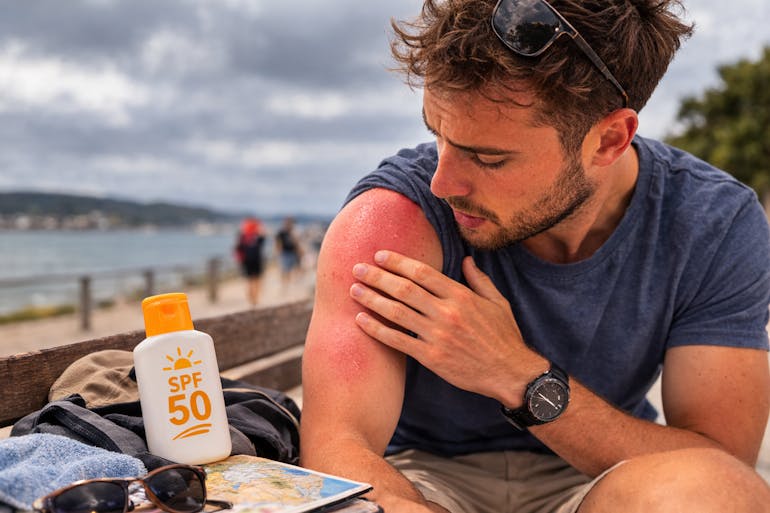
"I Burned on a Cloudy Day": When UV Exposure Catches People Off Guard
When most people think about sunburn, they imagine a bright summer day: clear blue skies, intense sunshine, and hours spent at the beach. In those situations, the risk of burning feels obvious.
But many sunburn stories begin in a very different way.
The sky is grey, the temperature feels mild, and the sun is barely visible. It doesn’t seem like the kind of day when sunscreen is necessary. People go for a walk, attend an outdoor event, or sit outside at a café without thinking much about sun protection.
Then later that evening, something unexpected happens. The skin feels warm. Redness appears on the shoulders, nose, or arms. By nightfall, it becomes clear that despite the cloudy weather, the skin has burned.
Across online communities and forums, people frequently share these surprising experiences. Many say they didn’t realise sunburn was possible without obvious sunshine.
These stories highlight an important lesson: sunburn isn’t only about how bright the sun looks - it’s about ultraviolet (UV) exposure, which can still be significant even when the sky is cloudy.
In this article, we explore real experiences of cloudy-day sunburn and why these situations catch so many people off guard.
"It Didn’t Even Feel Sunny": The Cloudy Day Surprise
Many sunburn stories begin with a sense of disbelief.
People often describe spending time outside on a day that didn’t feel particularly sunny.
"An hour outside in Wales on an overcast day and my shoulders were lobster red." -u/booksandmints
Because the weather appears mild and the sunlight is diffused by clouds, it’s easy to assume that sun protection isn’t necessary.
This can lead to spending long periods outdoors without sunscreen.
"I got burned on a day when the sun wasn’t even really visible." -u/cloudydaymistake
For many people, the burn isn’t noticeable until hours later.
The redness often appears gradually during the evening, long after the time spent outside.
That delay can make the experience especially confusing. Since the sun never seemed particularly strong, it can be difficult to connect the burn with earlier outdoor exposure.
As a result, cloudy-day sunburn often feels like it came out of nowhere.
Why Clouds Don’t Block UV Radiation
The reason cloudy-day sunburn occurs is relatively simple: clouds do not block ultraviolet radiation completely.
Visible sunlight and ultraviolet radiation behave differently in the atmosphere.
While thick cloud cover may reduce brightness and lower the temperature, a significant proportion of UV rays can still pass through clouds and reach the skin.
"I always thought clouds meant you couldn’t get burned." -u/sunburnsurprise
This misunderstanding is common because people tend to associate sunburn with heat and brightness.
However, ultraviolet radiation is invisible and can still be present even when the sun appears weak.
"It didn’t feel sunny at all but I still ended up burned." -u/beachdaymistake
In some situations, clouds can even scatter sunlight in ways that increase UV exposure in certain areas.
Combined with reflections from surfaces such as water, sand, or pavement, this can lead to significant exposure even on overcast days.
Because these effects are difficult to see or feel, people often underestimate the risk.
Everyday Situations Where Cloudy Day Sunburn Happens
Unlike traditional beach sunburn, cloudy-day burns often happen during everyday activities.
People frequently describe getting burned while doing things that didn’t feel like "sunbathing" at all.
"I went hiking on a cloudy day and didn’t bother with sunscreen." -u/forestwalker
Outdoor activities such as walking, cycling, or hiking can involve several hours of exposure, even if the weather feels cool.
Other people mention outdoor events such as concerts or festivals.
"We were sitting outside at a festival all afternoon and I didn’t realise I was burning." -u/outdoorconcert
In these situations, the focus is usually on the activity rather than the weather.
Because the sun doesn’t feel intense, sunscreen may not seem necessary.
But over time, the cumulative exposure can still lead to sunburn.
The risk increases further when people remain outdoors for extended periods without shade.
The "Cool Weather" Trap
Another factor that contributes to cloudy-day sunburn is temperature.
Many people associate sunburn with hot weather. When the air feels cool or breezy, the perceived risk often feels lower.
"It was windy and cool so I didn’t think I needed sunscreen." -u/cooldaymistake
Cool weather can make it easier to spend long periods outside without noticing how much time has passed.
Because the skin doesn’t feel overheated, there are fewer warning signs that exposure may be building up.
"I stayed outside for hours because it didn’t feel hot at all." -u/outsideallafternoon
This combination of comfortable temperatures and reduced brightness creates what many people later recognise as a false sense of security.
Instead of seeking shade or reapplying sunscreen, people may remain outdoors far longer than they would on a hot sunny day.
By the time the skin begins to show signs of sunburn, the exposure has already occurred.
Why Holiday Destinations Make This Worse
Cloudy-day sunburn can become even more surprising when it happens during travel.
Many popular holiday destinations have stronger UV radiation than regions further north.
Even when the sky appears overcast, UV levels may still be higher than people are used to at home.
"First day of my holiday and I got burned even though it was cloudy." -u/holidaylesson
Tourists often spend entire days outdoors exploring cities, visiting beaches, or sightseeing.
Cloud cover may make the weather feel comfortable, encouraging longer periods outside.
"It was overcast in Spain but I still ended up completely burned." -u/travelburn
In these situations, people may not realise that their exposure is much higher than usual.
Because the sun doesn’t feel intense, sunscreen may be forgotten or applied less frequently.
Many travellers say their cloudy-day sunburn happened during the first days of a holiday, before they had adjusted their sun protection habits.
These experiences often become memorable lessons about how misleading weather conditions can be.
What People Say They Do Differently Now
After experiencing unexpected sunburn, many people say they changed their habits.
Across online discussions, several protective strategies appear repeatedly.
Checking the UV index
Rather than judging sun exposure by appearance alone, some people now check the daily UV index.
"Now I check the UV index instead of just looking at the weather." -u/smartweather
The UV index provides a more accurate indication of sunburn risk than cloud cover or temperature.
Wearing sunscreen even on cloudy days
Many people say they now apply sunscreen regardless of the weather.
"I wear sunscreen every day now, even when it’s cloudy." -u/cloudlessons
Daily sunscreen use has become a routine for people who have experienced unexpected burns.
Carrying sunscreen when outdoors
Others say they keep sunscreen with them during outdoor activities.
"I keep sunscreen in my bag so I’m never caught out again." -u/preparednow
This allows them to reapply protection if they end up spending more time outside than planned.
Using hats and shade
Physical protection also helps reduce exposure.
"A hat and some shade make a huge difference." -u/outdooraware
These habits can significantly reduce UV exposure, even when weather conditions are misleading.
When Sunburn From "Mild" Weather Can Still Be Serious
Because cloudy-day sunburn often comes as a surprise, people may not realise they have burned until several hours later.
"I didn’t realise how bad it was until later that night." -u/laterregret
By that time, the inflammatory response in the skin has already begun.
Sunburn from cloudy conditions can be just as severe as burns that occur during bright sunshine.
The difference is simply that people were less aware of the risk.
We asked Alessandro Grenci, Superintendent Pharmacist at Medino, for his perspective.
"Many people associate sunburn with bright sunshine, but ultraviolet radiation can still reach the skin through cloud cover. This means it’s possible to burn even on days that feel cool or overcast."
"Using sunscreen consistently, especially when spending long periods outdoors, can help reduce this risk. It’s also helpful to check the UV index rather than relying on how sunny the weather appears."
Recognising that UV exposure doesn’t always match visible sunshine can help people protect their skin more effectively.
Conclusion: Sunburn Isn’t Always About Sunshine
Cloudy-day sunburn often feels surprising because it challenges our assumptions about the weather.
When the sun is bright and the temperature is high, most people instinctively think about sunscreen and shade.
But when the sky is grey and the air feels cool, those precautions are easy to forget.
The experiences shared in online communities show how often this leads to unexpected sunburn.
People go for walks, attend events, or relax outdoors without noticing the gradual buildup of UV exposure.
By the time redness appears later in the evening, the damage has already occurred.
These stories highlight an important lesson: sunburn risk is not determined solely by how sunny it looks outside.
Clouds can reduce brightness, but they don’t eliminate ultraviolet radiation.
For many people, experiencing a cloudy-day burn once is enough to change their habits permanently.
And as these experiences show, the safest approach is simple -protect your skin whenever you expect to spend time outdoors, even when the sun doesn’t seem strong.
