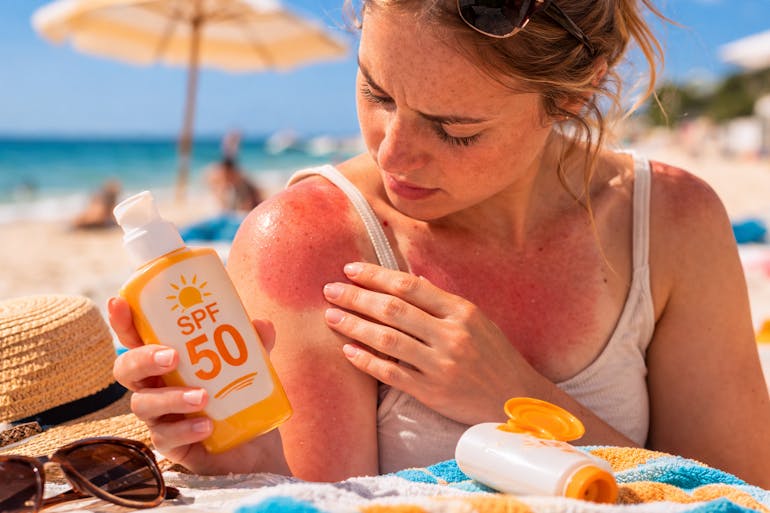
"I Used SPF But Still Burned": The Most Common Sunscreen Mistakes
For many people, applying sunscreen feels like the simplest way to avoid sunburn. The logic seems straightforward: choose a high SPF, apply it before going outside, and enjoy the day.
Yet countless people have experienced something confusing and frustrating -getting sunburned even though they used sunscreen.
Across online communities, discussions about this topic appear frequently. People describe carefully applying SPF, spending time outdoors, and later discovering that their shoulders, nose, or back have turned bright red.
The immediate reaction is often disbelief. If sunscreen is designed to prevent sunburn, why does it sometimes seem like it doesn’t work?
In many cases, sunscreen itself isn’t the problem. Instead, small mistakes in how it’s applied or used can significantly reduce its effectiveness.
From applying too little product to forgetting to reapply during long days outside, these errors are surprisingly common. By looking at real experiences shared online, it becomes easier to understand why sunburn can still happen - and what people say they changed to prevent it in the future.
"I Thought I Was Protected": Stories of Unexpected Burns
Many people who share sunburn stories online describe a similar moment of surprise.
They believed they had protected their skin properly, only to realise hours later that they had still burned.
"I was so careful and put on waterproof SPF 70 every two hours, but I still ended up burned." -u/More_Pothos
In situations like this, the sunburn often appears gradually. At first the skin may feel warm or slightly tight. Later in the evening, redness becomes more noticeable.
Some people say the burn became visible only after returning indoors.
"I thought I had done everything right but my shoulders were completely red by the evening." -u/sunburnsurprise
Experiences like these can lead people to question whether sunscreen actually works.
But when discussions continue, many users begin identifying the small details that might have contributed to the burn - things they hadn’t considered at the time.
These conversations often reveal how easy it is to make small mistakes when spending long periods outdoors.
Using Too Little Sunscreen
One of the most common reasons sunscreen appears to fail is surprisingly simple: most people use too little.
Sunscreen products are tested in laboratories using specific application amounts to determine their SPF rating. In real life, however, many people apply far less product than those tests assume.
"Most people don’t apply anywhere near enough sunscreen to get the SPF on the label." -u/glass_plants
When sunscreen is applied in a thin layer, its effective protection can drop significantly.
People often realise this only after learning more about recommended sunscreen amounts.
"I realised later that I was barely using any sunscreen compared to what’s recommended." -u/justanotherburn
Another issue is uneven application.
It’s easy to spread sunscreen quickly over large areas of the body, but small patches of missed skin can burn even when the surrounding area is protected.
Commonly overlooked areas include the shoulders, upper chest, and back of the neck.
Because of this, many people who previously burned despite sunscreen say they now apply much more product than they used to.
Forgetting to Reapply
Another common mistake is assuming sunscreen lasts all day.
While many sunscreens provide strong protection initially, their effectiveness decreases over time.
"Reapplication is the key. Every hour or two you really need to put more on." -u/sakamyados
Several factors contribute to sunscreen wearing off during the day. Sweat, water exposure, and even normal skin oils can gradually reduce the protective layer.
"It’s very hard to keep up with sunscreen when you're swimming and sweating all day." -u/imnosuperfan
Beach holidays often make this problem worse.
People may apply sunscreen in the morning before leaving their accommodation, but spend the entire day swimming, walking, and relaxing in direct sunlight.
Without reapplication, the original sunscreen layer may no longer provide full protection by the afternoon.
This is why many sun safety recommendations suggest reapplying sunscreen every two hours - and more frequently after swimming.
Many users say they began avoiding sunburn only after making reapplication a regular habit.
Applying Sunscreen Too Late
Another mistake that frequently appears in sunburn stories is applying sunscreen after sun exposure has already started.
Some people say they only applied sunscreen once they reached the beach or pool.
"Apply sunscreen before you even step outside so it has time to work." -u/Mirrortooperfect
When sunscreen is applied outdoors, the skin may already have been exposed to direct sunlight for some time.
"By the time I put sunscreen on I’d already been sitting in the sun for a while." -u/beachdaymistake
Many sunscreens also require a short period to properly absorb into the skin.
Applying sunscreen before leaving home helps ensure the protective layer is already in place once exposure begins.
Some people who used to burn regularly say this simple change made a noticeable difference.
Instead of applying sunscreen at their destination, they now apply it as part of their routine before heading outside.
Missing Easy-To-Forget Areas
Another pattern that appears repeatedly in sunburn stories is burning in small areas that were accidentally missed.
"I always manage to miss some tiny spot that ends up burning." -u/maraq
These areas often become obvious later when the rest of the skin remains protected.
Certain parts of the body are particularly easy to forget.
"My ears and the tops of my feet always get burned if I’m not careful." -u/sunaware
Commonly overlooked spots include:
- ears
- scalp along hair partings
- the back of the neck
- the tops of feet
- the backs of knees
Because these areas receive direct sunlight but are not always included in sunscreen routines, they can burn even when the rest of the body is protected.
Many people say they only realised this after noticing consistent burns in the same locations.
Over time, they began including these areas deliberately when applying sunscreen.
Relying on High SPF Alone
Another common misunderstanding involves the meaning of SPF numbers.
Many people assume that high-SPF sunscreen provides complete protection from sunburn.
"Even with factor 50 sunscreen I still got burned after being outside for hours." -u/rbsudden
In reality, SPF reduces the amount of ultraviolet radiation reaching the skin but does not eliminate it entirely.
"No sunblock is 100% when you’re out in the sun all day." -u/Phillherupp
For example, SPF 50 blocks most UVB radiation under ideal conditions, but prolonged exposure can still cause damage.
This effect becomes more noticeable during long outdoor days, particularly in places where the sun is stronger than usual.
People who spend several hours outdoors without shade may still accumulate enough UV exposure to cause sunburn, even when using high-SPF products.
This is why many sun safety guidelines recommend combining sunscreen with additional protective measures.
What People Say Helped Them Avoid Future Burns
After experiencing unexpected sunburn, many people say they changed their habits.
Across online discussions, several practical strategies appear repeatedly.
Applying sunscreen earlier
Some people began applying sunscreen before leaving their home rather than waiting until they arrived at their destination.
"I put sunscreen on before leaving the house now." -u/Mirrortooperfect
Using more sunscreen than before
Others realised they had been using far too little product.
"Once I started using way more sunscreen, I stopped burning." -u/glass_plants
Reapplying frequently
Setting reminders to reapply sunscreen throughout the day is another common strategy.
"I set reminders to reapply every couple of hours." -u/MistyDawn
Combining sunscreen with shade and clothing
Some users say sunscreen alone wasn’t enough during long outdoor days.
"Hats and shade make a huge difference alongside sunscreen." -u/Bonjour19
These adjustments may seem simple, but many people say they dramatically reduced their risk of sunburn.
When Sunscreen Still Isn’t Enough
Even with careful sunscreen use, certain situations can still increase the risk of burning.
Long hours in direct sunlight, especially during peak UV periods, can overwhelm even high-SPF protection.
"It’s very difficult to avoid burning when you’re in direct sun for hours." -u/cassettinna
People with extremely fair or sensitive skin may also burn more easily than others.
"Even with SPF 50 I’ll burn if I’m outside long enough." -u/Kali711
In these situations, sunscreen works best when combined with other protective strategies such as shade, hats, or long-sleeved clothing.
We asked Alessandro Grenci, Superintendent Pharmacist at Medino, for his perspective.
"Sunscreen is very effective when used correctly, but small mistakes in how it’s applied can reduce its protection. Applying enough product, reapplying regularly, and covering commonly missed areas are all important steps."
"People who spend long periods outdoors should also combine sunscreen with other protective measures such as shade or clothing. If someone finds they burn frequently despite using sunscreen, it may be worth reviewing how it’s being applied."
Understanding these factors can help people get the most benefit from sunscreen.
Conclusion: Sunscreen Works - But Only When Used Correctly
Stories shared in online communities reveal how common it is for people to burn despite using sunscreen.
In most cases, these burns are not caused by sunscreen failing. Instead, they happen because of small details in how sunscreen is used.
Applying too little product, forgetting to reapply, missing certain areas, or spending extended time in direct sunlight can all reduce protection.
Once people recognise these mistakes, many say they are able to adjust their habits and significantly reduce their risk of burning.
Sunscreen remains one of the most effective tools for protecting skin from UV damage.
But as many people discover through experience, it works best when it’s applied carefully, used consistently, and combined with other sun protection strategies.
