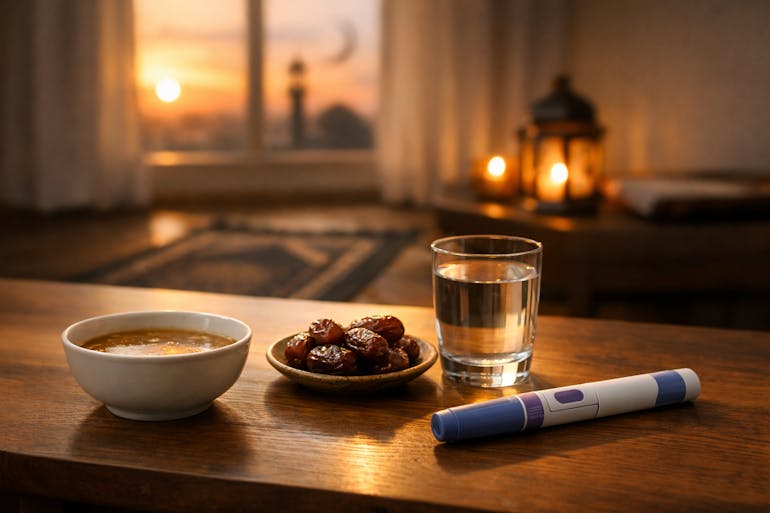
Mounjaro and Ramadan: Fasting Safely While Taking Tirzepatide
For many Muslims, Ramadan is a deeply spiritual month built around discipline, reflection, and fasting from dawn to sunset. Many people avoid food, drink, and non-essential oral medicines during fasting hours, although exemptions and scholarly views vary.
For those taking Mounjaro (tirzepatide), however, Ramadan can raise complex practical questions. The medication suppresses appetite, slows digestion, and can cause nausea, diarrhoea, and dehydration, particularly during dose increases.
So what happens when a medicine that reduces hunger and alters digestion overlaps with a month of prolonged daily fasting?
Across online communities, people share their experiences of fasting while using tirzepatide. Some describe smooth, manageable fasts. Others report dehydration, stomach pain, hypoglycaemia concerns, and difficult decisions about whether to continue treatment.
This article explores those lived experiences and what they suggest about fasting safely while taking tirzepatide. These accounts are anecdotal and individual responses vary. They do not replace personalised medical advice.
The First Ramadan on Mounjaro: What Catches People Off Guard
For many, the first few days can be unexpectedly difficult.
"Is anyone fasting Ramadan while diabetic, and on Mounjaro? Today is day 1 of Ramadan and my stomach is killing me…" u/anonymous
One of the biggest surprises reported is the return of morning hunger. Many people on Mounjaro describe reduced appetite, particularly in the mornings. But fasting can feel psychologically different.
"I did feel very hungry this morning. I was quite surprised because I'm hardly ever hungry in the mornings." u/brokeazz1
Fatigue is another common theme.
"The hunger has subsided… but boy oh boy am I exhausted." u/anonymous
Some describe difficulty distinguishing between hunger, nausea, dehydration, or anxiety.
"I’m very nervous about the lack of water because I am so dehydrated on this medicine." u/keeza3
Tirzepatide reduces appetite, but it does not eliminate the body’s need for hydration. Fasting from both food and water creates a very different metabolic situation from simply not feeling hungry.
The early days of Ramadan can therefore feel more intense than expected, especially for those also adjusting to a new medication.
Dehydration: The Central Concern
A recurring theme is dehydration.
Tirzepatide can reduce thirst and may cause dry mouth, nausea, and diarrhoea, particularly at higher doses. When you cannot drink during daylight fasting hours, these effects can be harder to manage.
"I’m pretty scared to take it incase I go hypo as I'm already pretty shaky and diarrhetic from the bad stomach." u/lessnumbpoet
Another community member highlighted dehydration risk.
"Delay your shot … I’m concerned about dehydration in addition to low blood sugars." u/Neat-Tangelo-1749
After speaking with a nurse, the original poster reflected.
"The nurse telling me about how likely my urine colour is due to dehydration… means I'm probably going to break my fast for today." u/lessnumbpoet
Dark urine, dizziness, and persistent diarrhoea are warning signs during fasting. While mild thirst is expected, ongoing fluid loss changes the risk profile.
Dehydration can affect kidney function, blood pressure, and blood glucose stability.
For individuals experiencing moderate or severe side effects, continuing a full fast may not be medically advisable.
Dose Timing: Continue, Reduce, or Pause?
Another common question is whether to continue, reduce, or delay Mounjaro during Ramadan.
"I am due to up my dose to 5mg but don’t see the need to… Shall I continue taking 2.5mg during Ramadan or stop?" u/ColdThen9516
Others echoed concerns about increasing doses during altered eating patterns.
"You don't want to mess with your MJ dose while your body is dealing with a new program of what is essentially intermittent fasting." u/AdvertisingThis34
In some cases, healthcare professionals supported temporary adjustments.
"I've finally got in touch with the diabetic nurse and she's bumped me down to 2.5mg for Ramadan and then will go back up to the 5 after." u/lessnumbpoet
Ramadan is generally not an ideal time for dose escalation.
Titration phases are when nausea, diarrhoea, and appetite suppression are most pronounced. Combining these with prolonged fasting can increase unpredictability.
Maintaining stability rather than progressing doses is often a safer approach during Ramadan.
Hypoglycaemia Concerns
For people with Type 2 diabetes, particularly those using insulin or sulfonylureas, fasting introduces concerns about low blood glucose.
"It doesn’t sound safe to me… make sure you’re being safe and seeking answers from medical professionals when it comes to something as crucial as not eating on a medicine that has a possible side effect of low blood sugar." u/CFDatingForMe
Mounjaro alone carries a relatively low risk of hypoglycaemia. However, when combined with other glucose lowering medicines, the risk increases.
Some users expressed emotional tension between medical exemption and religious duty.
"Technically I could be excused from fasting for medical reasons… but my guilty conscience would really not like that." u/anonymous
The desire to fast can conflict with medical advice, particularly for people who otherwise feel well.
However, hypoglycaemia during prolonged fasting can become dangerous quickly, especially without daytime fluid intake.
A personalised diabetes management plan is essential before attempting Ramadan while taking Mounjaro.
Iftar Mistakes: The Overeating Trap
One recurring experience involves overeating at iftar.
After fasting all day, some attempt to compensate by eating large portions quickly, which can be uncomfortable while taking tirzepatide.
"Around 4am my stomach started hurting like I’ve never felt before… It was the most violent vomiting I’ve ever experienced." u/Nice-Distribution-75
"Been there, done that. Had never vomited more violently in my life before." u/uzanur
"I over did it… and spent seven days with awful diarrhea and stomach pain." u/fire_thorn
Tirzepatide slows gastric emptying. After prolonged fasting, rapidly consuming large amounts of food and fluid may overwhelm the digestive system.
Possible consequences include:
- abdominal cramping
- nausea
- vomiting
- diarrhoea
- trapped gas pain
Many users report learning to eat slowly and in smaller portions.
Some People Report Fewer Side Effects While Fasting
Not all experiences are negative.
Some users report that structured fasting reduces side effects, particularly when it prevents eating without hunger.
"My experience has been exactly the opposite. I only eat when I’m hungry, otherwise, I pay dearly with side effects." u/Enough-Celery1476
"FASTING prevents side effects in general… Don’t eat if you're not hungry." u/Enough-Celery1476
GLP-1 medicines amplify satiety signals. Eating beyond hunger can worsen nausea and discomfort.
For individuals without dehydration risk or diabetes related concerns, Ramadan’s structure may align with appetite suppression effects.
Hydration planning remains essential.
Religious Exemptions and Health
Ramadan includes exemptions for illness.
"Not fasting for medical reasons is a completely valid reason to eat and drink." u/LouisePoet
"Are you allowed to have water for medical reasons…? It sounds like you may need to do that." u/XNegativaX
Islamic teachings commonly recognise exemptions where fasting may not be advisable for health reasons, and many people seek guidance from a trusted scholar as well as a clinician.
For individuals experiencing severe side effects, dehydration, or unstable blood sugars, from a health perspective it may be safer to break the fast. Many people also seek guidance from their imam or a trusted scholar on exemptions.
Balancing faith and health requires compassion, including self compassion.
A Practical Safety Framework
Individual plans must be personalised, but common themes emerge:
- Avoid increasing your dose during Ramadan
- Discuss possible temporary dose reduction with your prescriber
- Hydrate adequately between iftar and suhoor
- Break the fast if you experience persistent dizziness, vomiting, or signs of hypoglycaemia
- If diabetic, monitor blood glucose carefully and adjust medication only under medical guidance
These principles support safer fasting.
Pharmacist Perspective
We asked Alessandro Grenci, Superintendent Pharmacist at Medino, for guidance on fasting while taking Mounjaro.
"Ramadan introduces a prolonged period without both food and water, which changes how the body responds to medications like tirzepatide. Dehydration is the primary concern, particularly for patients experiencing diarrhoea or those taking additional diabetes medications." Alessandro Grenci, Superintendent Pharmacist at Medino
"Ramadan is generally not the right time to increase dose. If someone is tolerating their current dose well, maintaining stability is usually safer than progressing upward during altered eating and hydration patterns." Alessandro Grenci, Superintendent Pharmacist at Medino
"Anyone with diabetes, kidney concerns, or significant gastrointestinal side effects should speak to their prescriber before fasting. Religious exemptions exist for illness, and health should always take priority." Alessandro Grenci, Superintendent Pharmacist at Medino
Conclusion
Ramadan and Mounjaro can coexist, but planning is essential.
Some people fast successfully with minimal difficulty. Others experience dehydration, gastrointestinal distress, or anxiety around hypoglycaemia. Overeating at iftar is a commonly reported cause of discomfort.
Key themes from lived experiences include:
- dehydration risk requires careful management
- dose escalation during Ramadan may increase side effects
- small, slow meals at iftar are often better tolerated
- medical exemptions exist and should be respected
Fasting is a deeply personal act of faith, but health and safety remain paramount.
If you are considering fasting while taking Mounjaro, speak to your prescriber before Ramadan begins. With preparation, hydration planning, and realistic expectations, many people can observe the month safely.
