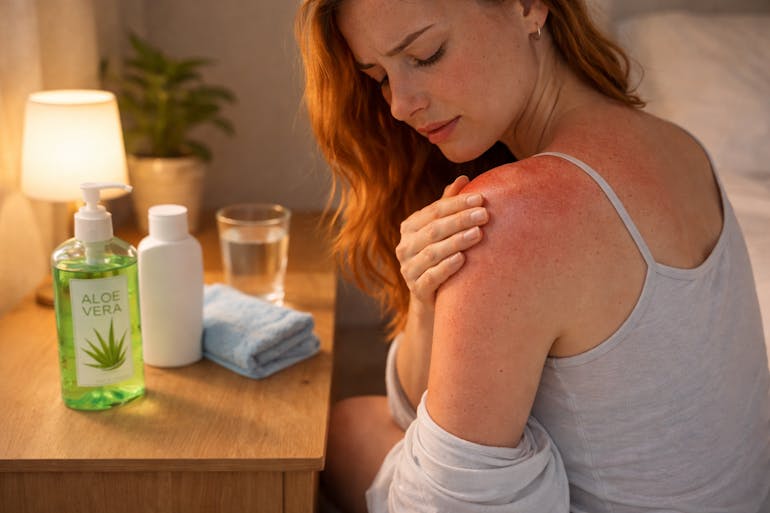
Sunburn Pain: What It Actually Feels Like (And How People Cope)
Most people think of sunburn as a temporary inconvenience - red skin, a bit of discomfort, and perhaps some peeling a few days later. But for many people who have experienced it, sunburn can be far more painful than expected.
Across online communities and forums, people often describe the experience in vivid terms. What begins as a warm, slightly uncomfortable sensation can quickly escalate into intense burning, extreme skin sensitivity, and days of disrupted sleep.
For some, the pain appears hours after sun exposure. For others, it builds gradually throughout the evening until even simple things like wearing clothes or lying in bed become difficult.
These experiences highlight something many people underestimate: sunburn is not just cosmetic damage - it is an inflammatory injury to the skin.
In this article, we explore what people say sunburn actually feels like, how the pain progresses over time, and the strategies people use to cope while their skin heals.
"It Feels Like My Skin Is On Fire"
One of the most common ways people describe sunburn pain is surprisingly simple: it feels like the skin is burning.
This sensation often develops gradually. After spending time outdoors, the skin may initially feel warm and slightly tight. Hours later, the intensity can increase significantly.
"It literally feels like my skin is on fire." -u/throwawayburnhelp
Many people say the discomfort becomes more noticeable in the evening, once they move indoors and their body begins to cool down.
Instead of relief, the opposite happens. The skin continues to radiate heat, and redness becomes more visible.
"The worst part was the heat coming off my shoulders. It felt like they were glowing." -u/Willswoo
This heat is caused by inflammation. Ultraviolet radiation damages skin cells, triggering the body’s immune response. Blood flow increases to the affected area, which is why sunburned skin often appears bright red and feels hot to the touch.
For many people, the sensation intensifies overnight. By the time they go to bed, the skin may feel tight, sore, and extremely sensitive.
The burning sensation can persist for several days depending on how severe the exposure was.
When Clothing and Sheets Hurt to Touch
Another experience frequently mentioned in sunburn discussions is extreme sensitivity to contact.
Once the skin becomes inflamed, even light pressure can feel uncomfortable.
"My back was so burned that even a t-shirt touching it hurt." -u/Jazz-like-Raccoon
Clothing that normally feels soft and comfortable can suddenly become irritating. Many people describe switching to loose garments or avoiding clothing on the affected area entirely.
The problem often becomes most noticeable at night.
"Too sore to have clothes or bed sheets against my skin." -u/Willswoo
Sleeping with sunburn can be surprisingly difficult. Sheets rubbing against sensitive skin can cause discomfort with even small movements.
People who have experienced severe sunburn often describe trying to find positions that minimise contact with the burned areas.
Some sleep on their stomach if their back is burned. Others lie still for long periods to avoid moving the skin.
The result is often a restless night and fatigue the following day.
The Itching Stage: "Devil’s Itch"
For some people, the most difficult stage of sunburn does not occur immediately.
Several days after the burn, a new symptom can appear: intense itching.
Online communities sometimes refer to this phenomenon as "devil’s itch," a term used to describe a deep, persistent itching sensation that can feel almost impossible to relieve.
"The itching was honestly worse than the burn." -u/BigBadSunburn
Unlike ordinary itching, this sensation is often described as deeper within the skin rather than on the surface.
"It felt like ants crawling under my skin and nothing stopped it." -u/itchy_shoulders
This phase tends to occur as the skin begins to heal and repair itself. Damaged skin cells are gradually replaced, and the outer layer of skin may begin to peel.
While peeling is part of the healing process, it can also trigger itching as the skin regenerates.
Many people say the temptation to scratch can be difficult to resist. However, scratching irritated skin can sometimes make the problem worse.
Instead, people often try cooling the area, applying moisturiser, or distracting themselves until the sensation fades.
Blisters and Severe Burns
In more serious cases, sunburn can go beyond redness and itching.
Severe burns may cause blistering, swelling, and significant pain.
"My shoulders were covered in blisters and it ruined the whole holiday." -u/Skoodledoo
Blisters occur when damage extends deeper into the skin layers. Fluid accumulates beneath the surface as part of the body’s healing response.
This type of sunburn can be especially uncomfortable.
"I had sunburn so bad that I couldn’t move my arms without pain." -u/booksandmints
In severe cases, the affected skin may feel tight and swollen. Movements that stretch the skin - such as lifting the arms or bending the shoulders - can become painful.
Blistering sunburn often requires additional care and may take longer to heal than milder burns.
While most sunburn improves within a few days, more severe cases may require medical advice.
How Long Sunburn Pain Usually Lasts
Many people who share their experiences online describe a similar timeline when it comes to sunburn pain.
The discomfort often builds gradually during the first day.
"The first night was the worst. Everything hurt and I couldn’t sleep." -u/sleeplessinsun
For many individuals, the first 24 to 48 hours are the most painful.
During this period, redness, swelling, and sensitivity tend to peak.
After a few days, the pain usually begins to decrease as the skin starts to recover.
"After two days it stopped hurting as much, but then the peeling started." -u/peelingshoulders
Peeling is a normal part of the healing process. As damaged skin cells are shed, new skin gradually replaces them.
While the peeling stage may be less painful than the initial burn, it can still be uncomfortable and sometimes itchy.
Recovery times vary depending on the severity of the burn and how much skin was affected.
Mild sunburn may improve within a few days, while more severe burns can take a week or longer to fully heal.
What People Say Helps With Sunburn Pain
When sunburn does happen, people often search for ways to reduce discomfort while their skin heals.
Across online discussions, several coping strategies appear repeatedly.
Cooling the skin
Lowering the skin temperature is often the first step people take.
"Cool showers and wet towels helped a lot with the burning feeling." -u/booksandmints
Cool compresses or showers can provide temporary relief by reducing heat and inflammation.
Using soothing lotions or aloe
Moisturising products are frequently mentioned as helpful during the healing process.
"Aloe gel from the fridge was the only thing that gave relief." -u/unicorn-ice-cream
Products containing aloe vera are particularly popular because they feel cooling on irritated skin.
Pain relief medication
Some people also use over-the-counter pain relief medication to manage discomfort.
"Ibuprofen helped reduce the pain and inflammation." -u/AlexisRosesHands
Anti-inflammatory medications can help reduce swelling and soreness during the most painful stages.
Rest and hydration
Many users emphasise the importance of giving the body time to recover.
"Drink water and stay out of the sun for a few days." -u/SteveC91OF
Hydration and rest can support the body’s natural healing process.
When Sunburn Pain May Be a Warning Sign
Most sunburn improves within a few days, but severe symptoms may indicate a more serious burn.
Some people report additional symptoms such as chills, dizziness, or blistering.
"I had chills and blisters after my worst burn." -u/burnedonce
Large blisters, fever, dehydration, or intense pain may require medical advice.
We asked Alessandro Grenci, Superintendent Pharmacist at Medino, for his perspective.
"Sunburn is essentially an inflammatory injury caused by ultraviolet radiation. Mild burns usually improve within a few days, but more severe burns can cause blistering, significant pain, and other symptoms."
"Cooling the skin, keeping it moisturised, and avoiding further sun exposure are important first steps. If someone develops severe blistering, fever, or persistent symptoms, they should seek advice from a pharmacist or healthcare professional."
Recognising when sunburn requires additional care is an important part of protecting skin health.
Conclusion: Sunburn Is More Than a Minor Inconvenience
Many people think of sunburn as a temporary nuisance.
But the experiences shared in online communities reveal something different.
For those who have experienced severe sunburn, the pain can be intense - disrupting sleep, making clothing uncomfortable, and lasting for several days.
From the initial burning sensation to the itching and peeling that follow, sunburn can be far more uncomfortable than many people expect.
These stories also highlight an important lesson: prevention matters.
Applying sunscreen, seeking shade, and paying attention to sun exposure can help reduce the risk of experiencing this kind of discomfort.
Because once someone has experienced severe sunburn pain, many say they never forget it - and they rarely make the same mistake again.
