Sunburn Recovery Stories: How Long Does It Actually Take to Heal?
Most people don’t start thinking about sunburn recovery until it’s already too late.
A long day at the beach, a walk in strong sunshine, or a relaxed afternoon outdoors can feel perfectly comfortable at the time. Then, hours later, the skin begins to feel warm and tight. Redness appears. By evening, it becomes clear that the sun has done more damage than expected.
At that moment, one question tends to come up again and again:
How long will this sunburn last?
Across online communities, people frequently share their experiences of recovering from sunburn. These discussions often reveal surprisingly similar timelines. While every burn is different, many people describe the same sequence of stages - from early redness and heat to peeling and eventual recovery.
In this article, we look at real recovery experiences shared online, exploring how sunburn typically progresses over time and what people say helped them cope while their skin healed.
The First Hours: Warm Skin and Early Redness
One of the most confusing things about sunburn is that symptoms don’t always appear immediately.
After spending time outdoors, the skin may initially look normal. Some people say it feels slightly warm or tight, but nothing seems serious at first.
"At first it just felt warm and tight, so I didn’t think much of it." -u/sunburnsurprise
This delay can make sunburn difficult to recognise early.
Several hours after sun exposure - often later in the evening - redness begins to appear more clearly.
"It didn’t look that bad at first, but by nighttime my shoulders were bright red." -u/beachdaymistake
This happens because sunburn is essentially an inflammatory response. Ultraviolet radiation damages skin cells, triggering the body’s immune system to react.
As inflammation develops, blood flow increases in the affected area. This is what causes the familiar redness and warmth.
At this early stage, some people still underestimate the severity of the burn. It may appear mild at first, but symptoms often intensify overnight.
The First 24 Hours: Pain and Inflammation Peak
For many people, the first night after sun exposure is when sunburn becomes most uncomfortable.
As inflammation increases, the skin may feel hot, swollen, and extremely sensitive.
"The first night was the worst. Everything hurt and I couldn’t sleep." -u/sleeplessinsun
This stage is often when people realise how severe their burn actually is.
The skin may feel tight and sore, particularly in areas that experienced the most sun exposure such as shoulders, back, or chest.
Some people also notice that the affected areas seem to radiate heat.
"The heat coming off my back was unbelievable." -u/Willswoo
During this period, even light contact can become uncomfortable. Clothing may irritate the skin, and lying down can feel difficult if the burn covers the back or shoulders.
For many individuals, this first 24-hour period represents the peak of sunburn pain.
The body’s inflammatory response is at its strongest, and the skin is most sensitive.
After this stage, symptoms usually begin to stabilise.
Days 2–3: Redness and Sensitivity Continue
Although the most intense pain often occurs during the first day, the skin usually remains irritated for several more days.
Redness can persist, and the skin may continue to feel tight or tender.
"The redness stayed for a few days and my skin felt tight the whole time." -u/mermaidsnlattes
Contact with clothing can still be uncomfortable, particularly if the burn is located on areas that move frequently.
"Wearing a shirt was painful for the first couple of days." -u/Jazz-like-Raccoon
During this stage, many people adjust their daily routines to avoid further irritation.
Loose clothing becomes preferable, and some people choose to stay indoors while the skin begins to recover.
Hydration and moisturising products are also commonly used at this stage to help reduce dryness and discomfort.
Although symptoms can still feel unpleasant, the worst pain usually begins to subside after the first couple of days.
Days 3–5: Peeling and Itching Begin
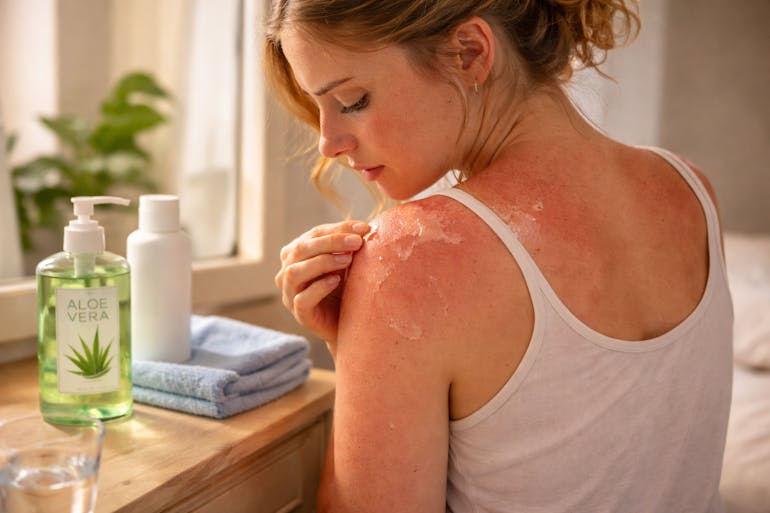
After several days, the skin often begins to enter the next stage of recovery: peeling.
Peeling occurs because the outer layer of damaged skin cells begins to shed.
"After two or three days my skin started peeling everywhere." -u/peelingshoulders
This stage is part of the natural healing process. As damaged skin is removed, new skin gradually forms underneath.
However, peeling can also be accompanied by itching.
"The itching during the healing phase was almost worse than the burn." -u/BigBadSunburn
Some people describe this itching as persistent and difficult to ignore.
Because the skin is still sensitive, scratching can sometimes make irritation worse.
For this reason, many people recommend keeping the skin moisturised and avoiding further sun exposure during this stage.
Although peeling can look alarming, it is generally a sign that the body is repairing the damaged skin.
Over the following days, the peeling gradually slows and the skin begins to return to its normal appearance.
Severe Burns: Blisters and Longer Recovery
While many sunburns improve within several days, more severe burns can take longer to heal.
Severe sunburn may involve blistering, swelling, or intense pain.
"My shoulders were covered in blisters and it took over a week to recover." -u/Skoodledoo
Blisters occur when deeper layers of the skin are damaged by ultraviolet radiation.
Fluid collects beneath the surface as part of the body’s healing response.
In these cases, recovery may take significantly longer than a typical mild sunburn.
"It took about ten days before my skin felt normal again." -u/burnedonce
Severe burns may also increase the risk of complications such as infection if blisters break open.
Because of this, people experiencing blistering sunburn are often advised to treat the skin gently and seek medical advice if symptoms worsen.
Even without complications, severe burns can take a week or longer for the skin to fully recover.
What People Say Helps the Healing Process
While time is ultimately the main factor in sunburn recovery, people often share strategies that helped them cope during the healing process.
Several approaches appear repeatedly in online discussions.
Cooling the skin
Reducing the heat trapped in sunburned skin can provide significant relief.
"Cool showers and damp towels helped take the heat out of the burn." -u/booksandmints
Cool showers, baths, or compresses can temporarily reduce inflammation and soothe irritated skin.
Moisturising frequently
As the skin begins to dry and peel, moisturisers can help restore hydration.
"Aloe gel and moisturiser helped stop the skin feeling so tight." -u/unicorn-ice-cream
Products containing aloe vera are often mentioned because they feel soothing and cooling.
Staying hydrated
Sunburn can contribute to dehydration, particularly after spending long periods outdoors.
"Drink lots of water because sunburn can really dehydrate you." -u/SteveC91OF
Maintaining hydration helps support the body’s recovery.
Avoiding further sun exposure
Perhaps the most important step during recovery is avoiding additional UV exposure.
"Stay completely out of the sun while your skin heals." -u/asjonesy99
Allowing the skin time to recover without additional damage is essential.
When Sunburn Recovery May Need Medical Advice
Most sunburn improves gradually without medical treatment. However, certain symptoms may indicate a more serious burn.
These can include blistering over large areas, fever, chills, dehydration, or severe pain.
"I had chills and blisters after my worst burn." -u/burnedonce
Severe sunburn may sometimes require professional advice.
We asked Alessandro Grenci, Superintendent Pharmacist at Medino, for his perspective.
"Sunburn is an inflammatory response caused by ultraviolet radiation damaging the skin. Mild sunburn usually improves within a few days, but more severe burns can take longer and may involve blistering or significant discomfort."
"Cooling the skin, keeping it moisturised, and avoiding further sun exposure are important early steps. If someone develops extensive blistering, fever, or persistent symptoms, they should seek advice from a pharmacist or healthcare professional."
Recognising when sunburn may be more serious can help ensure proper care.
Conclusion: Sunburn Healing Takes Time
One of the most reassuring patterns seen in online discussions is how similar many recovery experiences are.
While the severity of burns can vary, people often describe the same general timeline:
- early warmth and redness appearing hours after exposure
- pain and inflammation peaking during the first day
- sensitivity lasting several days
- peeling beginning after three to five days
- gradual recovery over the following week
For mild burns, improvement often begins within a few days. More severe burns can take longer, particularly if blistering occurs.
Although the healing process can feel slow, the body gradually repairs the damaged skin.
Many people say experiencing a painful sunburn once changed how they approach sun protection in the future.
And while sunburn recovery eventually happens, these experiences often serve as a reminder that prevention is always easier than healing.
