What to Eat in Your First Month on Mounjaro 2.5mg
Starting Mounjaro 2.5mg can feel both exciting and disorienting. Many people describe the first month as a period of rapid change: appetite drops sharply, familiar comfort foods suddenly feel unappealing, and even small meals may feel overwhelming. At the same time, there’s a strong desire to "do this right" by choosing foods that feel gentle on the stomach, supportive of weight loss, and aligned with long-term health goals.
In these early weeks, a lot of people experience shifts in hunger cues, slowed stomach emptying, and occasional nausea, which makes food selection feel more important than ever. Because of this, people often look for guidance on what to eat, how much to eat, and how to balance nutrition with what their body can realistically tolerate.
This article brings together the experiences of many new starters at the 2.5mg dose, focusing on the foods they found easiest to manage, the eating patterns that helped them feel better, and the adjustments they made when appetite was low or side effects were present.
Lean, Simple Foods Many People Tolerate Well
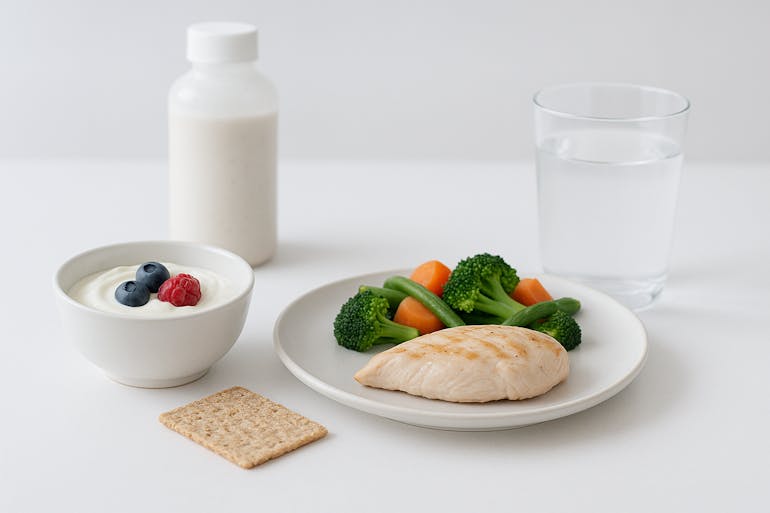
One of the clearest themes from user experiences is that simple, minimally processed foods tend to sit best during the first month. Many people naturally gravitate toward lean proteins, mild carbohydrates, and foods with straightforward flavours.
"lean protein (chicken, lean beef, tofu, fish and seafood, eggs, etc.) fresh vegetables. whole grains. cheese and dairy (high protein yogurt is good) beans and legumes… high quality fats (olive oil, avocados, etc.)." -Jindaya
Others echo the same prioritisation, often because richer foods cause discomfort in the early weeks.
"Prioritise lean protein - chicken, turkey, fish, seafood. Add a smaller than usual carb portion and plenty of veg." -clare12_3
For some, bland or gentle options become staples, especially on days when nausea is stronger.
"Ramen noodles if you feel nauseous" -whatsthedeal-
This pattern suggests that meals built around lean protein with small amounts of carbohydrates and vegetables often feel the most manageable early on. These combinations also tend to support satiety and stable energy while being easier on the stomach.
What to Do When You Have No Appetite
Lack of hunger is one of the strongest and most universal early effects of Mounjaro. Many people find themselves eating far less than usual and struggling to meet even modest calorie targets.
"I didn’t really want anything to eat when I first started… so I made sure to take a daily multivitamin… and used extra-protein low-sugar replacement shakes to make sure I was still getting in what my body needed." -montbkr
Protein shakes, yoghurts, soups, and soft foods are commonly used in the first month because they are easier to manage when heavy meals feel unappealing.
"I have to remind myself to eat… a cereal bar high in protein or a smoothie… worked like a charm." -anonymous
Some people also find that the reduced appetite requires small, frequent intakes rather than structured meals.
"I set a timer to make sure I’m getting something every 2–3 hours… small amounts of protein shake, yogurt, cottage cheese, etc." -nineohsix
Across experiences, the shared message is not to panic if appetite drops sharply. Instead, focus on gentle nutrition, hydration, and foods that feel tolerable — even if portions are very small.
Foods and Patterns That Commonly Trigger Discomfort
While tolerance varies, many people note certain foods cause more side effects in the early weeks, especially gastrointestinal symptoms. Common culprits include greasy, fatty, overly sweet, or spicy foods.
"Be careful of high citric acid… high fat, high sugar, high salt and spicy foods… Some people have found those cause ‘gastric distress’." -GrumpyHeadmistress
Others describe developing sudden aversions or "the ick" toward previously tolerated foods.
"I’ve got the ick with so many foods since taking Mounjaro – my options are limited." -bored75
Because delays in stomach emptying can amplify discomfort, many people start eating more slowly, opting for small portions and stopping at the first sign of fullness.
"Small meals, eat slow… eating too much too fast made me feel like I ate an elephant." -PrettyDealer5546
These experiences suggest that the first month is best approached with gentleness and flexibility — eating slowly, avoiding heavy foods early on, and listening closely to the body.
Hydration, Electrolytes, and Supplements People Rely On
Hydration comes up repeatedly as a critical part of managing the first month. Some users find that electrolyte drinks help compensate for reduced food intake or digestive side effects.
"Pedialyte has saved my life… my body craves it!" -gwathiegool
Others emphasise that dehydration can contribute to nausea, fatigue, or headaches, making hydration essential even when food feels difficult.
"The most important thing of all is hydration… it will solve many of your side effects." -Shelly432432
Some people incorporate multivitamins or protein-enriched drinks during periods of very low intake.
"I made sure to take a daily multivitamin… and drank lots of water." -montbkr
The overall picture is that hydration, gentle electrolytes, and nutrient-dense small foods can make the first month much more comfortable.
Pharmacist’s Comment
According to Alessandro Grenci, Superintendent Pharmacist at Medino, the early weeks on Mounjaro can bring rapid appetite changes and a lower tolerance for certain foods, so choosing nutrition that supports energy and digestion is key.
"GLP-1 medicines slow stomach emptying, so heavy or high-fat meals can feel uncomfortable at first. Small portions of lean protein and simple carbohydrates tend to be better tolerated.
If appetite is very low, liquid nutrition such as protein shakes, soups, or yoghurt-based drinks can help maintain energy without overwhelming the stomach.
Hydration is essential. If you’re struggling to eat, include fluids with electrolytes and speak to a clinician if dizziness, weakness, or sustained very low intake develops."
Alessandro Grenci, Superintendent Pharmacist at Medino
Final Thoughts
Your first month on Mounjaro 2.5mg is a time of adjustment — physically, mentally, and emotionally. Appetite changes can feel dramatic, and food preferences may shift unexpectedly. Most people find that leaning toward simple, protein-focused meals and avoiding very heavy or greasy foods helps ease them into the journey.
It’s also normal for intake to fluctuate from day to day. Some days you may only manage small snacks or shakes; others you may feel more able to eat a balanced meal. What matters is staying hydrated, choosing foods that feel nourishing, and paying attention to your body’s cues.
Many people describe the first month as a period of experimenting, learning what works for them, and gradually finding a new eating rhythm. If challenges arise — such as persistent nausea, dizziness, or very low intake — discussing them with a healthcare professional can help you stay safe and supported.
Approach this phase gently, stay curious, and trust that your body will guide you toward what it needs as you settle into your new routine.
