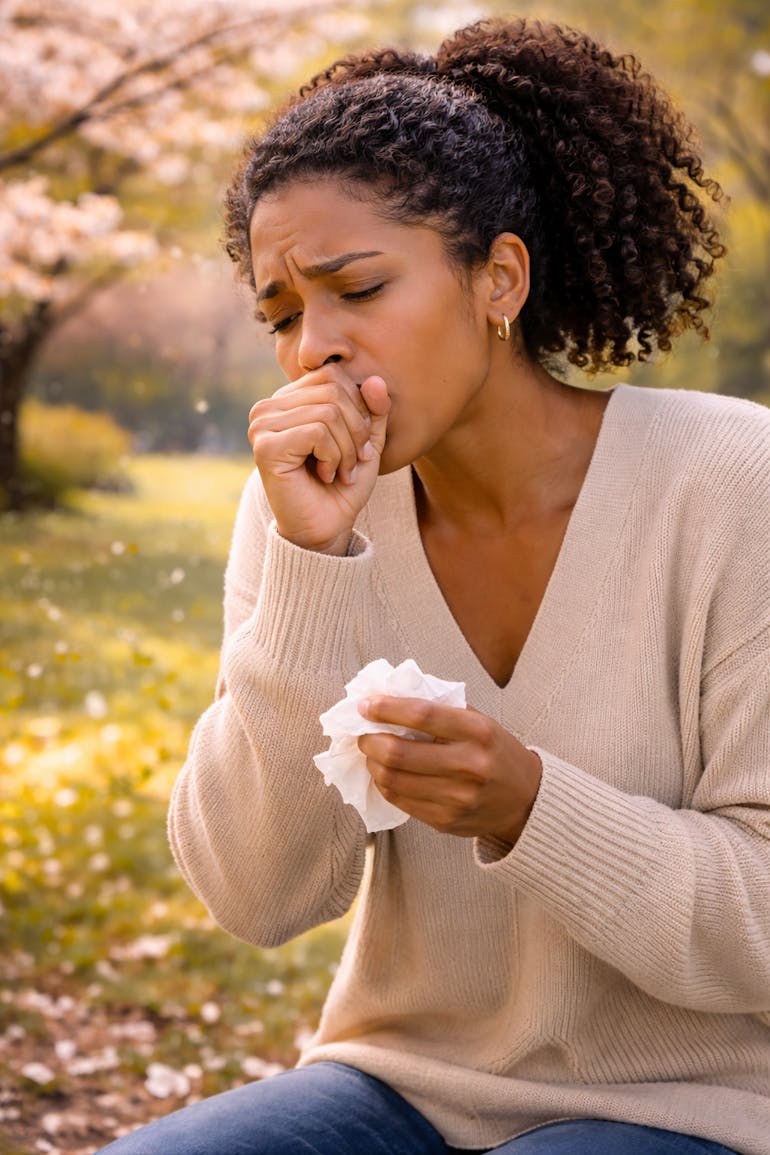
"Why Am I Coughing So Much?": The Hay Fever Cough People Don’t Expect
When people think about hay fever, they usually picture sneezing, itchy eyes, and a runny nose. These are the symptoms most commonly associated with seasonal allergies.
But many people experience another symptom during pollen season that often comes as a surprise: a persistent cough.
For some, the cough is mild and occasional. For others, it becomes a dry, irritating cough that lasts for weeks while pollen levels remain high.
Because coughing is commonly associated with colds, chest infections, or respiratory illnesses, many people initially assume they are sick.
However, across online discussions, many people describe the same experience: a cough that appears during allergy season, worsens when pollen is high, and improves once allergy symptoms are treated.
In this article, we explore real experiences of coughing during hay fever season, why allergies can trigger coughing, and what strategies people say help reduce this frustrating symptom.
"I Can’t Stop Coughing"
One of the most common experiences people describe during hay fever season is a persistent cough that seems difficult to control.
Unlike a productive cough caused by infection, allergy-related coughing is often dry.
"I’ve had a dry cough that seems connected to my allergies." -u/GokouD
Some people notice that their cough becomes particularly noticeable when pollen levels rise.
"I can’t stop coughing during peak pollen days." -u/OnyxWebb
This coughing can appear alongside other allergy symptoms such as sneezing, congestion, or itchy eyes.
For many people, the cough seems to appear suddenly at the beginning of pollen season and may continue for weeks.
Because the symptom does not always feel severe enough to suggest illness, it can remain confusing for those experiencing it.
The Tickly Throat That Triggers Coughing
Many people say the cough begins with irritation in the throat.
Rather than feeling like chest congestion, the sensation often starts with a tickling or itching feeling.
"My throat gets so itchy during allergy season that I keep coughing." -u/OnyxWebb
Others describe a constant tickling sensation that triggers repeated coughing.
"It feels like something is constantly tickling my throat." -u/Ummidk_12
This sensation occurs because pollen particles and allergic inflammation can irritate the upper airway.
When the throat becomes irritated, the body triggers the cough reflex as a protective response.
Unfortunately, this reflex can become persistent during allergy flare-ups.
Many people say the urge to cough appears frequently throughout the day, especially when talking, breathing dry air, or spending time outdoors.
Post-Nasal Drip and Allergy Cough
Another common cause of coughing during hay fever is post-nasal drip.
Post-nasal drip occurs when mucus produced in the nose and sinuses drains down the back of the throat.
This drainage can irritate the throat and trigger coughing.
"I keep clearing my throat because mucus keeps draining down it." -u/XeonProductions
Some people say the mucus irritation directly leads to coughing.
"The mucus running down my throat makes me cough." -u/StormzysMum
Post-nasal drip is particularly common during allergy season because inflammation in the nasal passages increases mucus production.
When this mucus accumulates in the throat, it can stimulate coughing repeatedly.
For many people, the cough becomes worse when congestion increases or when lying down.
When Allergy Cough Feels Like a Chest Problem
Because coughing is often associated with respiratory infections, many people initially worry they may have a chest illness.
"I thought I might have bronchitis at first." -u/Munchkin_puncher
Others become concerned when the cough continues for several weeks.
"The cough lasted for weeks." -u/StormzysMum
This confusion is understandable, because cough is one of the most common symptoms of respiratory illness.
However, allergy-related cough often behaves differently.
Rather than appearing suddenly with fever or body aches, it may develop gradually during pollen season and fluctuate depending on exposure to allergens.
Some people notice their cough improving during rainy weather or when staying indoors.
Others see improvement after taking allergy medication.
These patterns often provide clues that the cough may be related to hay fever rather than infection.
Why Pollen Can Trigger Coughing
Coughing during hay fever is usually triggered by irritation in the upper airway.
When pollen particles enter the nose or throat, the immune system recognises them as allergens.
This triggers the release of chemicals such as histamine, which cause inflammation in the nose and throat.
Some people notice coughing beginning shortly after pollen exposure.
"If I go outside during high pollen days I start coughing." -u/OnyxWebb
Others say the cough appears alongside other allergy symptoms.
"My cough usually starts when my allergies flare up." -u/GokouD
The airway becomes more sensitive during allergic reactions, making it easier for irritation to trigger coughing.
Even small amounts of pollen exposure can stimulate the cough reflex when inflammation is present.
This is why some people experience coughing primarily during peak pollen periods.
The Situations That Make Allergy Cough Worse
Many people notice that certain environments or activities make their cough worse during allergy season.
Outdoor exposure is one of the most commonly reported triggers.
"Being outside during high pollen days makes the coughing worse." -u/piratepixie
High pollen levels increase the amount of allergen entering the airway, which may intensify irritation.
Some people also notice their cough becoming worse at night.
"My cough is worse at night when my sinuses are blocked." -u/XeonProductions
Night-time coughing is often linked to post-nasal drip, which can increase when lying down.
Other factors that may worsen coughing during allergy season include:
- dry air
- prolonged talking
- exercise outdoors
- exposure to dust or other irritants
For many people, learning to recognise these triggers helps explain why coughing sometimes appears unexpectedly.
What People Say Helps Their Allergy Cough
Although allergy-related coughing can be frustrating, many people say certain strategies help reduce symptoms.
Several approaches appear frequently in discussions about managing hay fever cough.
Taking antihistamines
Antihistamines are widely used to reduce allergy symptoms by blocking the effects of histamine.
"Antihistamines helped reduce my allergy symptoms." -u/VividAd8085
Reducing the allergic reaction may also reduce irritation in the throat.
Using nasal sprays
Nasal sprays designed to reduce inflammation may help control congestion and post-nasal drip.
"The nasal spray helped my sinus irritation." -u/GokouD
When mucus drainage improves, coughing may also decrease.
Drinking warm liquids
Some people say warm drinks help soothe irritated throats.
"Warm drinks help soothe my throat when it gets irritated." -u/StormzysMum
Hydration may help reduce dryness and irritation in the airway.
Monitoring pollen levels
Checking pollen forecasts helps many people anticipate difficult allergy days.
"Checking pollen forecasts helps me avoid bad allergy days." -u/piratepixie
Reducing exposure during high pollen periods may help prevent coughing from worsening.
When Persistent Cough Might Need Medical Advice
Although coughing during hay fever is common, persistent coughing should not always be ignored.
Some people seek medical advice when their cough continues for several weeks.
"I spoke to my GP because the cough wouldn’t go away." -u/GokouD
We asked Alessandro Grenci, Superintendent Pharmacist at Medino, for his perspective.
"A persistent cough during hay fever season can sometimes be linked to post-nasal drip or irritation in the upper airway caused by allergens."
"Managing the underlying allergy symptoms may help reduce coughing. If symptoms persist or become severe, it may be helpful to speak with a pharmacist or healthcare professional for advice."
Professional advice can help determine whether allergies are responsible or whether another condition may be involved.
Conclusion: Why Hay Fever Can Cause Coughing
Hay fever is often associated with sneezing and itchy eyes, but many people also experience coughing during pollen season.
This symptom is commonly triggered by throat irritation, post-nasal drip, and inflammation caused by allergic reactions.
Because coughing is often associated with illness, it can easily be mistaken for a cold or chest infection.
However, recognising the connection between pollen exposure and coughing can help people understand what is happening.
For many people, identifying this link is the first step toward managing symptoms more effectively during allergy season.
