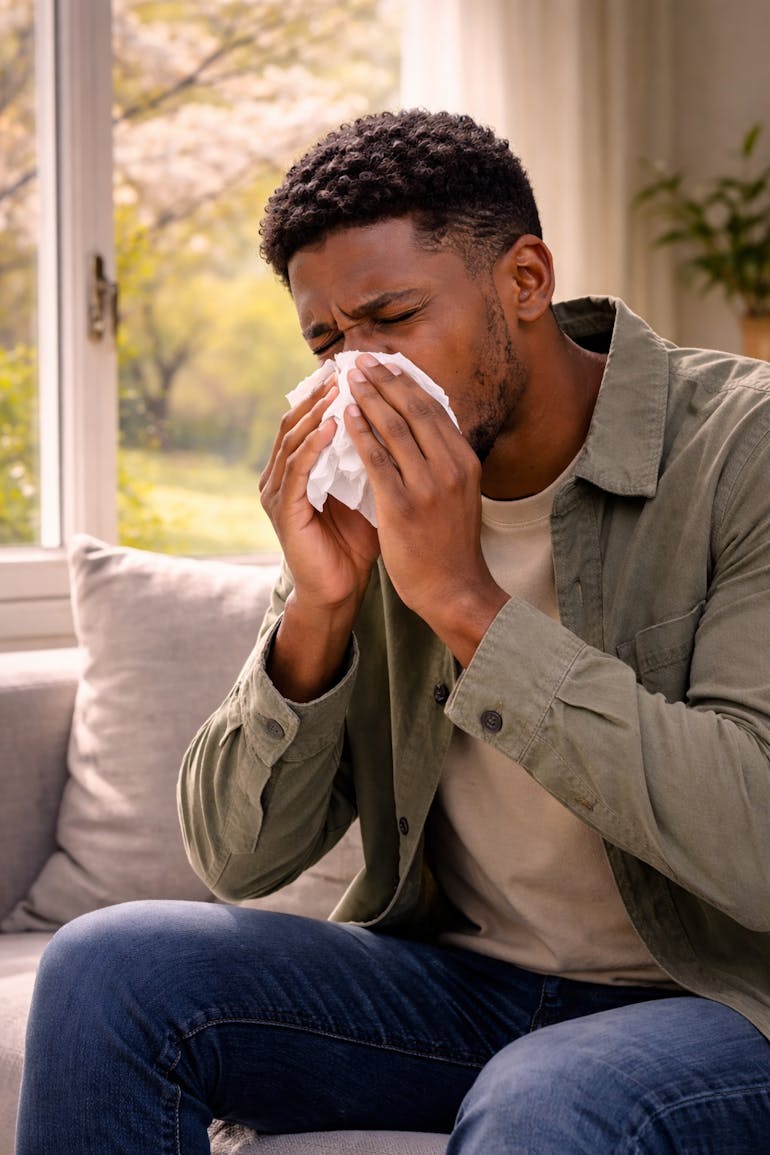
"Why Are My Allergies Worse Indoors?": How Pollen Follows You Inside
For many people with hay fever, the outdoors is the obvious place where symptoms begin. When pollen levels are high, stepping outside can quickly trigger sneezing, itchy eyes, and congestion.
Because of this, many people expect their symptoms to improve once they go indoors.
But for some allergy sufferers, the opposite seems to happen.
Instead of finding relief inside, they notice that sneezing continues, their nose becomes blocked again, or their eyes start itching once they return home.
This experience can feel confusing. If pollen is outside, why would symptoms continue indoors?
Across online discussions, many people describe noticing that their hay fever symptoms persist or even worsen after coming inside.
In reality, pollen rarely stays outdoors. Tiny pollen particles can travel easily on clothing, hair, pets, and through open windows. Once inside, these particles can remain in indoor environments and continue triggering allergic reactions.
In this article, we explore real experiences of indoor allergy symptoms during pollen season, why pollen often follows people indoors, and what strategies people say help reduce indoor exposure.
"I Feel Worse When I Come Inside"
Many people with hay fever say they expect their symptoms to improve when they return indoors after spending time outside.
Instead, they sometimes notice the opposite.
"Sometimes I feel worse when I come back inside after being outdoors." -u/OnyxWebb
Others say their symptoms seem to restart shortly after they arrive home.
"I start sneezing again when I get home." -u/StormzysMum
This pattern can be surprising.
People often associate pollen exposure exclusively with outdoor environments such as parks, gardens, or streets lined with trees.
But pollen particles are extremely small and lightweight. They can easily travel through the air and settle on clothing, skin, or hair.
When someone comes indoors after spending time outside, they may unknowingly bring pollen with them.
Once inside, these particles can continue triggering allergy symptoms.
For many people, this explains why sneezing or congestion sometimes continues long after they have left the outdoors.
How Pollen Gets Inside Homes
Many allergy sufferers eventually realise that pollen may be entering their homes in ways they hadn’t considered.
One common route is through open windows.
"I realised pollen was probably coming in through the windows." -u/piratepixie
During warm weather, it is natural to open windows to let fresh air circulate.
However, when pollen levels are high, this airflow can also bring large amounts of pollen indoors.
Another common source of indoor pollen exposure is clothing and hair.
People who spend time outside during pollen season may collect pollen particles on their clothes or in their hair.
Once indoors, these particles may transfer to furniture, bedding, or other surfaces.
Some people notice their symptoms continuing after returning home from outdoor activities.
"After being outside all day my allergies keep going when I get home." -u/OnyxWebb
Pets can also carry pollen indoors. Animals that spend time outdoors may pick up pollen on their fur and bring it into living spaces.
Because pollen particles are so small, they can circulate easily indoors once they enter a home.
This means that even people who avoid outdoor exposure may still encounter pollen inside.
When Bedrooms Become Allergy Triggers
Many people notice that their allergy symptoms feel worse at night or when they go to bed.
"My allergies seem worse when I go to bed." -u/XeonProductions
Others say they wake up with severe congestion in the morning.
"I wake up with my nose completely blocked." -u/Unfair-Ad-5314
Bedrooms can sometimes become places where pollen accumulates without people realising it.
Clothing worn during the day may carry pollen into the bedroom. Hair and skin can also hold pollen particles.
If someone lies down in bed without removing these particles, pollen may transfer to pillows or bedding.
Over time, bedding can accumulate pollen, particularly if windows are open or if pollen levels are high outside.
Because people spend many hours in their bedroom while sleeping, even small amounts of pollen exposure can trigger symptoms overnight.
This may explain why some people wake up feeling congested or irritated during pollen season.
Why Symptoms May Feel Worse in the Evening
Many people notice that their hay fever symptoms gradually worsen as the day progresses.
By evening, sneezing, congestion, and irritation may feel more intense than earlier in the day.
"By the evening my allergies feel much worse." -u/StormzysMum
Others report similar patterns during allergy season.
"My allergies always seem worse at night." -u/GokouD
Several factors may contribute to this experience.
First, pollen exposure often accumulates throughout the day. Even small exposures during outdoor activities can build up over time.
Second, fatigue can make symptoms feel more noticeable.
After a long day of dealing with sneezing, itchy eyes, or congestion, people may feel more sensitive to discomfort.
Finally, nasal congestion may increase when lying down. This can make breathing through the nose more difficult at night, intensifying the feeling of blocked sinuses.
These factors together may explain why many people feel their allergy symptoms become worse later in the day.
The Situations That Make Indoor Allergies Worse
Certain conditions can increase the amount of pollen entering homes during allergy season.
One of the most common factors is sleeping with windows open.
"Sleeping with the window open makes my allergies worse." -u/OnyxWebb
Open windows allow fresh air to circulate, but they can also allow pollen particles to enter the home continuously.
Windy weather can also increase indoor pollen exposure.
"On windy days pollen seems to get everywhere." -u/piratepixie
Wind can carry pollen over long distances, increasing the amount of pollen in the surrounding environment.
When windows or doors are open during these conditions, pollen can easily move indoors.
Other factors that may increase indoor pollen exposure include:
- outdoor clothing being worn inside the home
- pets bringing pollen indoors on their fur
- poor ventilation allowing allergens to circulate
- pollen settling on furniture or bedding
Because pollen particles are microscopic, they can remain present indoors without being visible.
For people with hay fever, even small amounts of exposure can trigger symptoms.
What People Say Helps Reduce Indoor Pollen Exposure
Although indoor pollen exposure can be frustrating, many people share strategies that help reduce symptoms inside the home.
Several approaches appear frequently in discussions about managing indoor allergies.
Showering after coming indoors
Some people find that showering after spending time outdoors helps remove pollen from their hair and skin.
"Showering after being outside helps reduce my symptoms." -u/StormzysMum
Removing pollen from the body may help prevent it from spreading around the home.
Changing clothes after outdoor exposure
Changing clothes after coming indoors is another strategy some people use.
"Changing clothes after coming inside helps a lot." -u/VividAd8085
Outdoor clothing may carry pollen particles that continue triggering symptoms indoors.
Keeping windows closed during high pollen days
Monitoring pollen levels can help people decide when to keep windows closed.
"Keeping the windows closed helps keep pollen out." -u/piratepixie
Limiting airflow during peak pollen periods may reduce the amount of pollen entering the home.
Washing bedding regularly
Because pollen may accumulate on bedding, some people wash sheets and pillowcases more frequently during allergy season.
"Washing bedding more often helps during allergy season." -u/XeonProductions
This may help reduce exposure during sleep.
Although these strategies cannot completely eliminate pollen indoors, many people say they help reduce the severity of symptoms.
When Indoor Symptoms Might Need Medical Advice
For some people, hay fever symptoms persist even when they try to reduce pollen exposure.
When symptoms continue indoors or become difficult to manage, medical advice may help.
"I spoke to my doctor because my allergies didn’t improve indoors." -u/GokouD
We asked Alessandro Grenci, Superintendent Pharmacist at Medino, for his perspective.
"Pollen particles can easily enter indoor environments through open windows, clothing, or pets."
"Reducing exposure indoors may help improve symptoms, but some people may still require treatment to manage hay fever effectively."
Speaking with a pharmacist or healthcare professional can help people find treatments that reduce symptoms during pollen season.
Conclusion: Why Pollen Doesn’t Always Stay Outside
Many people expect hay fever symptoms to improve as soon as they go indoors.
However, pollen particles can easily enter homes through open windows, clothing, pets, and air circulation.
Once indoors, these particles can remain in the environment and continue triggering allergy symptoms.
For many allergy sufferers, understanding how pollen spreads indoors helps explain why symptoms sometimes persist after returning home.
Recognising these patterns can also help people take steps to reduce exposure and manage their hay fever more effectively during pollen season.
