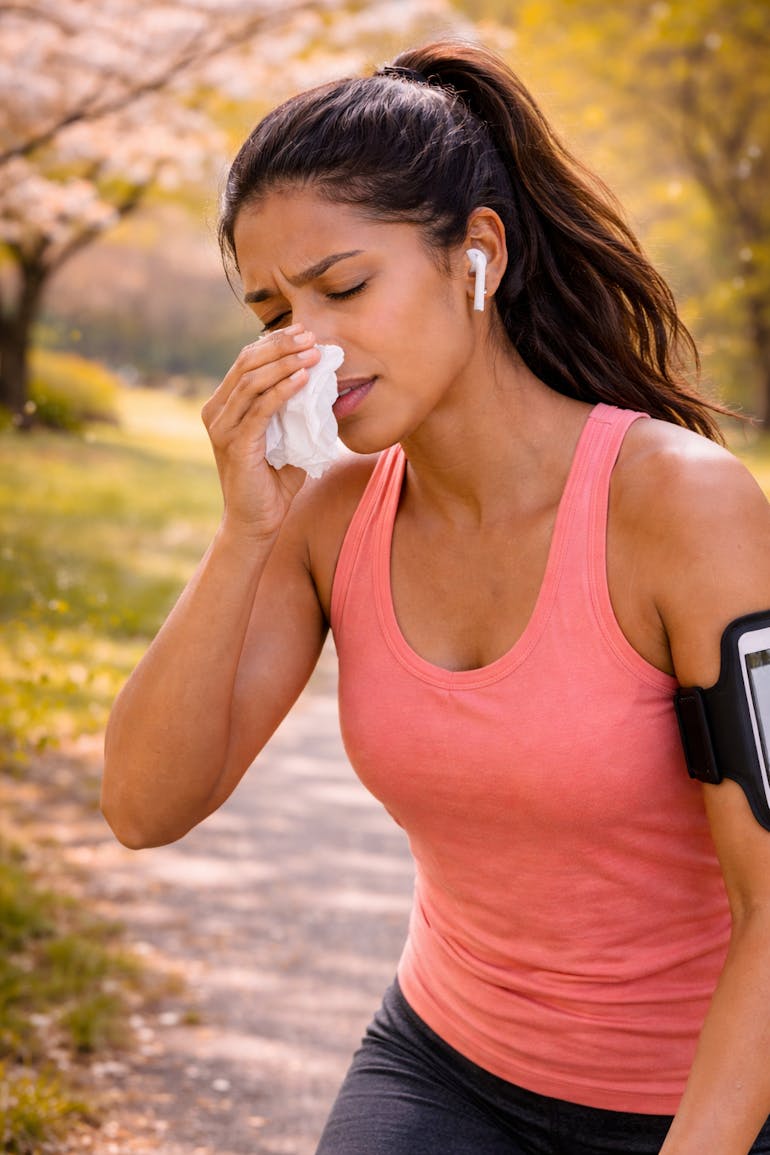
"Why Do My Allergies Get Worse When I Exercise?": Hay Fever and Outdoor Activity
For many people, exercise is an important part of staying healthy. Running, cycling, walking, or playing sports outdoors can improve fitness, mood, and overall wellbeing.
But for people with hay fever, outdoor exercise can sometimes come with an unexpected problem: allergy symptoms that suddenly become much worse during physical activity.
Some people notice sneezing starting halfway through a run. Others experience a runny nose, itchy eyes, or coughing shortly after beginning an outdoor workout.
Because exercise increases breathing and airflow through the respiratory system, it can also increase exposure to airborne pollen.
Across online discussions, many people describe their hay fever symptoms becoming noticeably worse during outdoor activity, particularly during peak pollen periods.
In this article, we explore real experiences of allergies worsening during exercise, why outdoor activity can intensify hay fever symptoms, and what strategies some people say help them stay active during allergy season.
"My Allergies Get Much Worse When I Run"
Many people notice that their hay fever symptoms become more intense when they exercise outdoors.
Some say symptoms appear almost immediately once they begin running or cycling.
"My allergies go crazy whenever I run outside." -u/OnyxWebb
Others describe repeated sneezing fits during workouts.
"If I run during pollen season I end up sneezing constantly." -u/piratepixie
This can make outdoor exercise feel frustrating.
For people who enjoy running or cycling regularly, allergy symptoms can interrupt workouts and reduce motivation.
Instead of focusing on their training, they may find themselves dealing with a runny nose, itchy eyes, or irritation in the throat.
These symptoms can make even light exercise uncomfortable during pollen season.
Why Exercise Can Increase Pollen Exposure
One of the main reasons hay fever symptoms worsen during exercise is that physical activity increases the amount of air moving through the respiratory system.
During exercise, breathing becomes faster and deeper.
This means more air - and more airborne particles such as pollen - enter the nose and airways.
Some people notice their symptoms appearing shortly after they start exercising outdoors.
"After a few minutes outside running my allergies start acting up." -u/StormzysMum
Others say heavy breathing during workouts seems to trigger symptoms quickly.
"Being outside and breathing heavily makes my allergies flare up." -u/GokouD
Under normal conditions, the nose helps filter the air we breathe. Tiny hairs and mucus in the nasal passages trap particles such as dust or pollen.
However, during intense exercise, people often begin breathing through their mouths as well as their noses.
Mouth breathing bypasses some of the nose’s natural filtering mechanisms, allowing pollen to reach the throat and airways more easily.
As a result, allergens may trigger stronger reactions during physical activity.
The Symptoms People Notice During Exercise
When hay fever symptoms appear during outdoor activity, they can take several forms.
Sneezing is one of the most common symptoms reported during exercise.
Others notice a runny nose or nasal congestion developing mid-workout.
"My nose starts running and my eyes start itching when I exercise outside." -u/OnyxWebb
Eye irritation is also common, particularly on windy days when pollen is circulating in the air.
Some people also experience coughing triggered by throat irritation.
"I end up coughing when I try to exercise during allergy season." -u/XeonProductions
For many people, these symptoms are not dangerous, but they can make exercise less comfortable.
When sneezing, coughing, and congestion appear during physical activity, workouts may feel more difficult.
Some people even notice that their endurance decreases when allergy symptoms are severe.
Fatigue, congestion, and irritation can make it harder to maintain normal training intensity.
The Times of Day When Exercise Feels Worse
Many people with hay fever notice that the severity of their symptoms during exercise depends on when they exercise.
For some, early morning workouts seem to trigger the strongest symptoms.
"Morning runs during pollen season are the worst for my allergies." -u/piratepixie
This may be because certain plants release pollen during the morning hours.
As a result, pollen levels in the air can be particularly high early in the day.
Windy conditions can also influence allergy symptoms during exercise.
"Windy days make my allergies much worse when I’m outside." -u/StormzysMum
Wind spreads pollen more widely and keeps it circulating in the air.
During windy weather, pollen particles may remain airborne for longer periods, increasing exposure.
Many people also notice that dry, sunny days tend to produce stronger allergy symptoms compared with rainy days.
Rain can temporarily reduce pollen levels by washing particles out of the air.
Because pollen levels fluctuate depending on weather conditions, some workouts may feel much more comfortable than others during allergy season.
When Indoor Exercise Feels Easier
Because outdoor pollen exposure can trigger symptoms, some people choose to exercise indoors during peak pollen periods.
Gyms, indoor training facilities, and home workouts may reduce exposure to airborne allergens.
Some people say switching to indoor exercise helps them stay active during difficult allergy seasons.
"I started exercising indoors during peak pollen season." -u/GokouD
Others say their symptoms improve significantly when they avoid outdoor pollen exposure.
"Working out inside helps my allergies a lot." -u/OnyxWebb
Indoor exercise environments may still contain allergens such as dust, but they usually contain far less pollen than outdoor environments during peak pollen periods.
For people whose allergies are strongly triggered by pollen exposure, indoor exercise can provide a practical alternative.
Some people alternate between indoor and outdoor workouts depending on pollen forecasts.
What People Say Helps When Exercising With Hay Fever
Although hay fever can make outdoor activity more difficult, many people share strategies that help them continue exercising during allergy season.
Several approaches appear frequently in discussions about managing allergies while staying active.
Checking pollen forecasts
Many people check pollen forecasts before planning outdoor workouts.
"Checking pollen forecasts helps me decide when to run." -u/piratepixie
Avoiding outdoor exercise during peak pollen periods may reduce symptoms.
Exercising when pollen levels are lower
Some people choose to exercise later in the day when pollen levels may be lower.
"I try to exercise later in the day when pollen is lower." -u/StormzysMum
The timing of pollen release varies depending on plant species and weather conditions.
Using antihistamines
Some people find that allergy medication helps reduce symptoms during workouts.
"Taking antihistamines before exercising helps control symptoms." -u/VividAd8085
Antihistamines work by blocking the effects of histamine, a chemical released during allergic reactions.
Showering after exercise
Removing pollen from the body after exercise may help reduce ongoing symptoms.
"Showering after a run helps wash pollen off." -u/XeonProductions
Showering and changing clothes can remove pollen particles that may otherwise remain on the skin or clothing.
These strategies may help reduce exposure and make exercise more comfortable during allergy season.
When Exercise Symptoms Might Need Medical Advice
Although many people experience mild allergy symptoms during exercise, more severe symptoms may require medical advice.
Some people seek help when their allergies begin interfering with physical activity.
"I spoke to my doctor because my allergies were affecting exercise." -u/GokouD
We asked Alessandro Grenci, Superintendent Pharmacist at Medino, for his perspective.
"Exercise can increase exposure to airborne pollen because breathing becomes faster and deeper during physical activity."
"If hay fever symptoms are affecting daily activities or exercise routines, speaking with a pharmacist or healthcare professional may help identify appropriate treatment options."
Professional advice may help people find treatments that allow them to continue exercising comfortably during allergy season.
Conclusion: Why Hay Fever Can Affect Exercise
For many people, exercise is an important part of their daily routine.
However, outdoor physical activity during pollen season can increase exposure to airborne allergens.
Faster breathing, mouth breathing, and increased airflow through the airways can all make hay fever symptoms more noticeable during workouts.
As a result, people with seasonal allergies may experience sneezing, congestion, itchy eyes, or coughing while exercising outdoors.
Understanding how pollen exposure interacts with physical activity can help explain why symptoms sometimes worsen during exercise.
For many people, adjusting workout timing, monitoring pollen levels, and managing allergy symptoms can make it easier to stay active throughout hay fever season.
