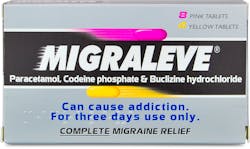
Migraine treatment - Dr. Reddy's Sumatriptan 100mg 6 Tablets
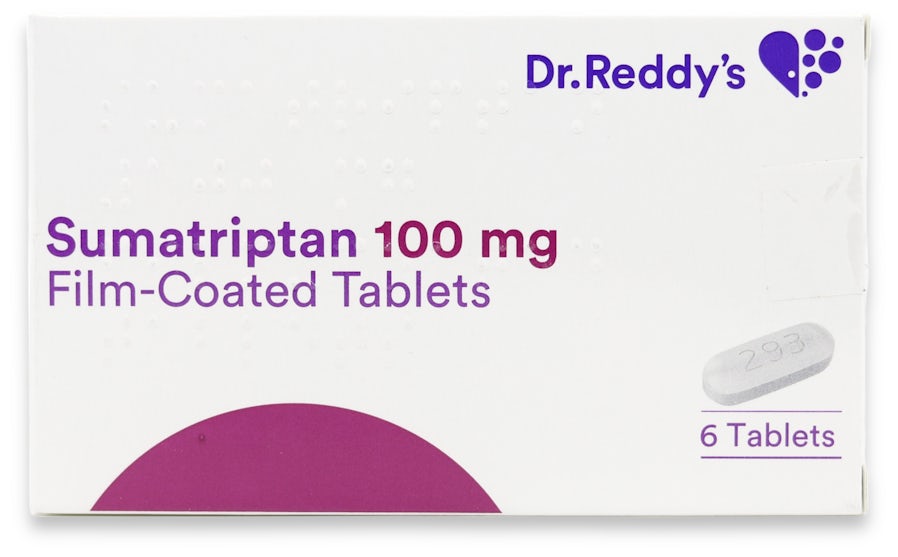
Migraine treatment - Dr. Reddy's Sumatriptan 100mg 6 Tablets
All strengths
What 500,000+ customers say about medino:
Description
What is Sumatriptan 100mg used for?
Sumatriptan 100mg is used for the acute treatment of migraine attacks, with or without aura, where there is a clear diagnosis of migraine. It is taken after symptoms start and is not used to prevent migraines.
When should I take Sumatriptan 100mg?
Take sumatriptan as soon as possible after the migraine starts, although it can be taken at any stage during the attack. Swallow the tablet whole with water.
Can I take another Sumatriptan 100mg tablet if my migraine comes back?
Yes, if the first dose worked but the migraine returns. Leave at least 2 hours between doses and do not take more than 300mg in 24 hours.
What if Sumatriptan 100mg does not work?
If the first dose does not relieve your migraine, do not take another dose for the same attack. Sumatriptan may still be used for a future migraine. Ask your doctor or pharmacist for advice if it does not provide relief.
What are the common side effects of sumatriptan?
Common side effects can include dizziness, drowsiness, nausea, vomiting, flushing, shortness of breath, weakness, tiredness and sensations such as tingling, numbness, heat, cold, pressure or tightness.
Can I take sumatriptan with other migraine medicines?
Some migraine medicines must not be taken at the same time as sumatriptan. This includes ergotamine or similar medicines, and other triptans or 5-HT1 receptor agonists. Specific time gaps are required between these medicines and sumatriptan.
Can sumatriptan make you sleepy?
Yes. Both migraine and sumatriptan can cause drowsiness. If you feel drowsy, do not drive or operate machinery.
Consultation Process
Our service does not include a prescription. Instead, your treatment is supplied under a legal framework known as a Patient Group Direction (PGD). The process follows these steps:
1. Complete a health questionnaire
Provide information about your health, medical history, migraine symptoms, previous diagnosis and any medicines you currently take.
2. Pharmacist review
A pharmacist will review your responses and may contact you by phone or video call if further information is needed to support a safe and appropriate supply decision.
3. Private consultation
All interactions are confidential. You can discuss any questions about your migraine treatment and the appropriate use of sumatriptan.
4. Identity verification
You may be asked to provide identification to confirm that you are the intended user. This is typically required for your first order only.
5. Supporting information
You may be asked to provide additional information about your migraine history, previous treatments, medical conditions or medicines to support the pharmacist's assessment.
Your GP can be notified of your request and the outcome of the supply decision, if you wish us to do that.
Purchasing this medication does not guarantee supply. The decision to supply is made by the pharmacist based on the information provided. If supply is not appropriate, your order will be refunded.
Ingredients
Active ingredient: Sumatriptan succinate 100mg.
Tablet core: Lactose Monohydrate, Croscarmellose Sodium, Microcrystalline Cellulose, Lactose, and Magnesium Stearate.
Film: Lactose Monohydrate, Mannitol (E421), Titanium Dioxide (E171), Triacetin, and Talc.
Usage and Instructions
What it is used for
Sumatriptan is used for the acute relief of migraine attacks, with or without aura, where there is a clear diagnosis of migraine. It should not be used to prevent migraine attacks.
Adults aged 18 to 65
- The usual recommended oral dose is 50mg.
- Some patients may require a 100mg dose.
- Take the prescribed dose as soon as possible after the migraine begins, although it can be taken at any stage during an attack.
- Swallow the tablet whole with water.
If the migraine returns
- If the first dose worked but symptoms return, another dose may be taken.
- Leave at least 2 hours between doses.
- Do not take more than 300mg in total within 24 hours.
If the first dose does not work
- Do not take a second dose or another sumatriptan preparation for the same migraine attack.
- The attack may be treated with paracetamol, acetylsalicylic acid or a non-steroidal anti-inflammatory drug.
- Sumatriptan may still be used for a later migraine attack.
- If sumatriptan does not provide relief, ask your doctor or pharmacist for advice.
Other migraine medicines
- Do not use sumatriptan at the same time as ergotamine, medicines similar to ergotamine, or another triptan or 5-HT1 receptor agonist.
- Wait at least 24 hours after ergotamine or another triptan or 5-HT1 receptor agonist before taking sumatriptan.
- After taking sumatriptan, wait at least 6 hours before taking an ergotamine-containing medicine and at least 24 hours before taking another triptan or 5-HT1 receptor agonist.
If you take too much
Do not take more than 300mg of sumatriptan in 24 hours. If you take more than this, contact your doctor for advice.
Always take sumatriptan as directed and ask a doctor or pharmacist if you are unsure about how to use it.
Warnings
Do not use this medicine if
Do not take sumatriptan if you:
- Are allergic to sumatriptan or any of the other ingredients.
- Have ischaemic heart disease, angina, coronary artery spasm or have previously had a heart attack.
- Have peripheral vascular disease.
- Have had a stroke or transient ischaemic attack (TIA).
- Have moderate or severe high blood pressure, or mild high blood pressure that is not controlled. People with mild, treated high blood pressure may be able to use sumatriptan.
- Have severe liver disease.
- Are using ergotamine, medicines similar to ergotamine such as methysergide, or another triptan or 5-HT1 receptor agonist.
- Are taking a monoamine oxidase inhibitor (MAOI), or have taken one during the previous 2 weeks.
- Are under 18 years old.
Sumatriptan is not indicated for the management of hemiplegic, basilar or ophthalmoplegic migraine.
Speak to your doctor before use
Speak to your doctor or pharmacist before taking sumatriptan if:
- You are a heavy smoker or use nicotine replacement therapy, particularly if you are a man aged over 40 or a woman who has been through the menopause. Your heart function may need to be checked because these factors can increase the risk of heart disease.
- You have a history of seizures or other factors that could make a seizure more likely, such as a head injury or alcoholism.
- You have liver or kidney disease.
- You are allergic to sulphonamide antibiotics, as you may also experience an allergic reaction to sumatriptan.
- You have been told that you have an intolerance to some sugars.
Sumatriptan contains lactose. People with certain rare hereditary problems affecting the digestion or absorption of particular sugars should not take this medicine.
Using medicines for headaches too frequently can make headaches worse. Speak to your doctor if you develop frequent or daily headaches despite regularly using headache medicines.
Age restrictions
Sumatriptan should not be used in children or adolescents under 18 years.
It is not recommended for people aged over 65 years because experience of its use in this age group is limited.
Pregnancy
If you are pregnant, think you may be pregnant or are planning to have a baby, ask your doctor or pharmacist for advice before taking sumatriptan.
Information about its use during pregnancy is limited. Sumatriptan should only be considered during pregnancy when the expected benefit to the mother is greater than any possible risk to the unborn baby.
Breastfeeding
Sumatriptan passes into breast milk.
Do not breastfeed for 12 hours after taking sumatriptan. Any breast milk expressed during this period should be discarded and not given to your baby.
Breast and nipple pain has also been reported in breastfeeding women after using sumatriptan. This has usually been temporary and resolved within 3 to 12 hours.
Interactions with other medicines
Tell your doctor or pharmacist about any medicines you are taking, have recently taken or might take.
In particular:
- Do not take sumatriptan at the same time as ergotamine, medicines similar to ergotamine or another triptan or 5-HT1 receptor agonist.
- Do not use sumatriptan if you are taking an MAOI or have taken one during the previous 2 weeks.
- Tell your doctor or pharmacist if you take an SSRI or SNRI antidepressant. Using these medicines with sumatriptan can cause serotonin syndrome. Symptoms can include restlessness, confusion, sweating, hallucinations, increased reflexes, muscle spasms, shivering, increased heartbeat and shaking.
- St John's Wort may make side effects more likely when taken with sumatriptan.
Driving and using machines
Migraine itself and sumatriptan can cause drowsiness. If you are affected, do not drive or operate machinery.
Serious allergic reactions
Allergic reactions to sumatriptan can range from skin reactions to anaphylaxis.
Stop taking sumatriptan and contact a doctor straight away if you develop symptoms such as:
- Rash or hives.
- Wheezing.
- Swelling of the eyelids, face or lips.
- Collapse.
Chest pain or tightness
Sumatriptan can cause pain, pressure or tightness in the chest, throat or elsewhere in the body. These effects can be intense but usually pass quickly.
If chest pain or tightness does not pass quickly or becomes severe, get medical help immediately. In a very small number of people, these symptoms may be caused by a heart attack.
Overdose
Do not take more than 300mg in any 24-hour period. If you take more than 300mg in 24 hours, contact your doctor for advice.
Side Effects
| System Disorder Category | Frequency | Details |
|---|---|---|
| Immune System Disorders | Not known | Reactions from skin hypersensitivity to anaphylaxis. |
| Nervous System Disorders | Common | Dizziness, drowsiness, sensory disturbances. |
| Not known | Seizures, tremor, dystonia, nystagmus, scotoma. | |
| Eye Disorders | Not known | Flickering, diplopia, reduced vision, permanent vision loss possible. |
| Cardiac Disorders | Not known | Bradycardia, tachycardia, palpitations, arrhythmias, ischaemic changes, coronary vasospasm, angina, myocardial infarction. |
| Vascular Disorders | Common | Transient blood pressure increases, flushing. |
| Not known | Hypotension, Raynaud's phenomenon. | |
| Respiratory, Thoracic, Mediastinal Disorders | Common | Dyspnoea. |
| Gastrointestinal Disorders | Common | Nausea and vomiting. |
| Not known | Ischaemic colitis, diarrhoea, dysphagia. | |
| Musculoskeletal, Connective Tissue Disorders | Common | Sensations of heaviness, myalgia. |
| Not known | Neck stiffness, arthralgia. | |
| General Disorders and Administration Site Conditions | Common | Pain, heat/cold sensations, pressure/tightness, weakness, fatigue. |
| Investigations | Very rare | Minor liver function test disturbances. |
| Psychiatric Disorders | Not known | Anxiety. |
| Skin and Subcutaneous Tissue Disorders | Not known | Hyperhidrosis. |