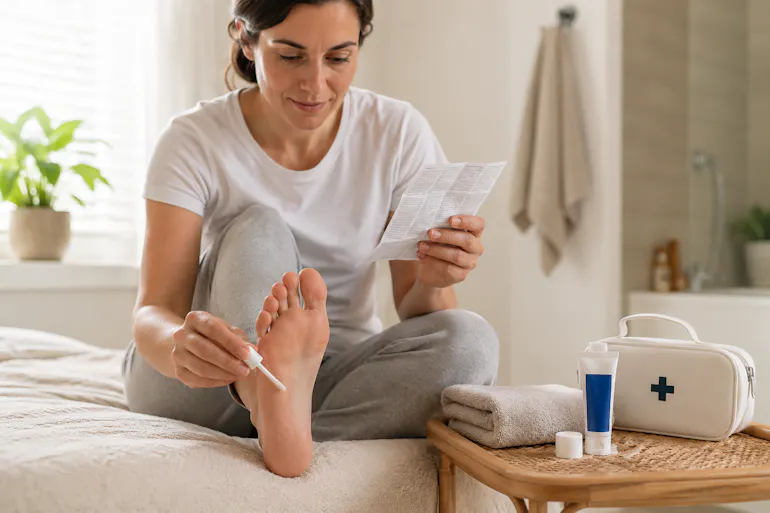
How to Remove a Wart at Home: Safe Treatments That Actually Work
Most straightforward hand warts and verrucas can be treated at home using licensed pharmacy treatments such as salicylic acid or an OTC freezing kit. These are not identical to treatments used in clinics, particularly professional liquid-nitrogen cryotherapy, but they're a reasonable and evidence-supported first step for many people. The good news is that most common warts are harmless, and many can be managed successfully at home with a little patience and the right treatment.
Home treatment isn't suitable for every wart. If the wart is on your face or genitals, if it's changed shape or colour, or if you're not completely sure it's a wart, don't try to remove it yourself - speak to a pharmacist first.
This guide is here to help you make that call, use a licensed treatment safely, and know what to do if something doesn't go to plan.
Can I treat this wart at home?
For most people with a typical hand wart or verruca, yes. But "can I treat a wart at home" isn't really one question - it's four, and it helps to separate them clearly before you buy anything.
The four categories of home treatment
| Category | Examples | Our view |
|---|---|---|
| Licensed self-treatment | Salicylic acid, OTC freezing kits | Evidence-supported, suitable for most people (see checklist below) |
| No treatment | Watchful waiting | A reasonable, deliberate choice - not a failure to act |
| Unproven home remedies | Apple cider vinegar, duct tape, tea tree oil, garlic, toothpaste, banana peel | Weak or absent evidence; some carry a real risk of skin irritation or burns |
| Unsafe DIY removal | Cutting, burning, bleach or strong acids, needles, superglue | Shouldn't be attempted at home |
Can you remove a verruca at home?
Yes - verrucas are simply warts on the sole of the foot, and the same licensed treatments apply: salicylic acid and OTC freezing kits both have evidence for verrucas as well as hand warts. The main practical differences are location and pressure: verrucas sit on weight-bearing skin, so they can be more uncomfortable to treat and slower to respond. The same safety checklist applies, and swimming pool precautions (covering the area, wearing flip-flops) are particularly relevant while treating one.
Do-not-self-treat checklist
Before starting any home treatment, check whether any of the following apply to you or the wart itself. If they do, speak to a pharmacist before buying or using anything.
- It might not be a wart - moles, skin tags, corns, and other growths can look similar; never apply acid or freezing treatment to something you're not confident about
- Location - face, eyelids, or genitals need clinical assessment rather than an OTC product
- Broken, infected or unusually painful skin - treating compromised skin can make things worse
- Diabetes - reduced healing capacity and sensation increase the risk of unnoticed injury
- Poor circulation - for similar reasons, damaged skin can heal poorly
- Reduced sensation in the hands or feet - you may not notice if treatment is causing harm
- A condition or medicine affecting your immune system - warts can behave differently and healing is less predictable
- Pregnancy or breastfeeding - check the product leaflet and ask a pharmacist before use, because suitability varies by product and treatment site
We often see people treating corns as though they're warts. The two need different approaches, so it's worth confirming which one you're dealing with before you start.
Pharmacist tip: If you're ever unsure whether you're looking at a wart, don't start with treatment - start with the diagnosis. Using a wart remover on a mole, skin cancer, or another skin condition can delay the right treatment and sometimes cause unnecessary damage.
A pharmacist can help you work out the safest next step, which often still doesn't mean a GP visit.
Choosing a licensed home treatment
Salicylic acid
Salicylic acid has the strongest evidence base of any topical home treatment, including recognition in Cochrane reviews of wart treatments, and it's often recommended as a first-line self-treatment for suitable common warts and verrucas.
How it works: it gradually removes the infected, thickened skin.
Who it suits: many adults and children, though age restrictions vary by product - always check the leaflet.
Advantages: inexpensive and widely available.
Disadvantages: requires daily application and patience; course length varies by product, often up to around 12 weeks - always follow the specific product's instructions rather than a general rule.
Home freezing kits
Over-the-counter freezing kits are licensed products, but it's worth being clear about what they are and aren't. They use a different, milder refrigerant than the liquid nitrogen used in professional cryotherapy, and evidence specific to consumer freeze products is more limited than the evidence for salicylic acid or clinic-based treatment.
How they differ from clinic cryotherapy: professional treatment reaches much lower temperatures in a single controlled application. Home kits require repeat applications - follow the product instructions - and results remain less predictable than professional treatment.
Advantages: less frequent application than salicylic acid - though that doesn't necessarily mean the wart clears sooner.
Limitations: can be uncomfortable, generally not suitable for young children or sensitive skin, and less established for thicker or older warts.
Pain: a stinging or burning sensation for a few minutes afterwards is normal; ongoing or worsening pain isn't, and is a reason to stop and seek advice.
Watchful waiting
It's worth saying plainly: doing nothing is often a reasonable, deliberate choice, not a failure to act. Choosing not to treat a painless wart is an active management decision, not neglect. This is well supported by the natural history of the condition - many childhood warts clear on their own within one to two years as the immune system deals with the virus. Adult warts may persist for longer. If a wart isn't painful, isn't spreading, and isn't bothering you, waiting is entirely reasonable.
What to check before buying a home wart treatment
A few practical things are worth confirming before you pick a product off the shelf.
Liquid, gel, or paint - best if you want precise, targeted application with a brush or dropper, and are comfortable with a daily routine.
Medicated plasters or patches - best if you want a simpler routine or find liquid or gel application fiddly; suits some hand and foot locations better than others.
Freeze kit - best if you'd rather apply treatment less often and are comfortable with some discomfort during application.
Whichever format you choose, also check:
- Hand wart versus verruca - some products are formulated or licensed specifically for one or the other
- Age restrictions - check the leaflet before using on children
- Treatment area limits - most products specify a maximum area or number of sites to treat at once
What is the best home wart remover?
For most people with a straightforward hand wart or verruca, a licensed salicylic acid product is the best-evidenced starting point, since it has the strongest supporting evidence of any home treatment. An OTC freezing kit is an appropriate alternative for those who prefer less frequent application, though the evidence specific to consumer freeze products is more limited. The "best" choice ultimately depends on the wart's location, your preference for routine, and any of the safety factors covered above. A pharmacist can also help you choose between gels, liquids, plasters and freezing products if you're unsure which is most suitable.
Using home treatment safely
- Protect the skin around the wart (petroleum jelly is a common approach) before applying acid-based treatments
- Some products recommend gently removing loosened dead skin before application. Others don't. Always follow the instructions supplied with your specific product, and never file until skin is sore or bleeding
- Apply only to the wart itself, not surrounding healthy skin
- Don't exceed the frequency or duration stated on the leaflet
- Stop and seek advice if you notice spreading redness, increasing pain, or signs of infection
What to do if home treatment goes wrong
This doesn't happen often, but it's worth knowing what to do if it does.
- Salicylic acid on healthy skin - remove the product according to the leaflet where possible, and avoid further application to that area; mild irritation usually settles, but persistent soreness should be checked by a pharmacist
- Excessive pain during or after freezing - stop treatment; a short period of stinging is normal, but ongoing pain isn't
- Blistering after a freezing kit - a small blister can be a normal reaction; keep it clean and covered, and seek advice if it's large, very painful, or shows signs of infection
- Bleeding after filing - stop, clean the area, and allow it to settle before considering whether to continue treatment
- Suspected infection (increasing redness, warmth, swelling, or discharge) - seek pharmacist or GP advice promptly
- Treatment applied to the wrong lesion (for example, a mole) - stop immediately and seek assessment
- Accidental contact near the eye - rinse thoroughly with water and seek medical advice
- A child touching or ingesting the product - follow the product's first-aid advice and seek urgent medical advice if needed
Unsafe DIY methods to avoid
Some approaches carry real risk, and these methods shouldn't be attempted at home.
- Cutting the wart off - risks bleeding, infection, scarring, and can spread the virus to surrounding skin
- Burning it off - no safe way to do this without professional equipment; risk of significant burns
- Bleach or strong household acids - damage healthy skin and offer no advantage over licensed treatments
- Superglue - not designed or licensed for wart treatment; can irritate or accidentally bond skin, and offers no established benefit
- Needles or pins - puncturing a wart risks infection and can spread the virus rather than remove it
The theme running through all of these: home treatment should never involve breaking the skin with a blade or needle, or using a corrosive substance. Licensed products are designed to work on intact skin for a reason.
Unproven home remedies
These come up constantly online, and weak evidence doesn't mean no risk.
- Apple cider vinegar - evidence is weak, and undiluted or frequent use can cause chemical burns
- Garlic - no reliable clinical evidence for wart clearance, and can irritate skin
- Tea tree oil - robust evidence for wart removal specifically is lacking, and it can irritate skin
- Banana peel - no meaningful clinical evidence that it clears warts; it may also delay use of a licensed treatment or proper assessment
- Toothpaste - no evidence base for wart treatment; some formulations can irritate skin
- Duct tape - occlusion therapy has been studied, with mixed results; some trials show a modest effect, others show none
None of these carry the same risk as the unsafe DIY methods above, but they shouldn't be assumed harmless either. If you want a treatment you can be confident in, salicylic acid and licensed freezing kits have a considerably stronger evidence base.
Many people are surprised that folk remedies like vinegar or garlic aren't risk-free just because they're natural. Any substance strong enough to affect skin can also irritate it.
Common mistakes people make at home
- Treating a mole or skin tag by mistake
- Stopping treatment too early, or continuing well past the product's recommended course without reassessing
- Applying too much product, or applying it to surrounding healthy skin
- Picking or scratching at the wart between treatments
- Sharing nail files or emery boards used on the wart with other people
- Not checking the leaflet's specific instructions for that product
- Never confirming the diagnosis before starting treatment
One of the most common reasons people think a treatment has failed is that they stopped too soon - real improvement often only becomes visible after several weeks of consistent use.
How to tell whether treatment is working
Progress varies by product and by person, so it's more useful to think in broad phases than fixed weeks.
- Early on: little visible change is normal, and doesn't necessarily mean the treatment isn't working
- After several weeks of consistent use: a responding wart may gradually flatten, soften, or shrink
- At the end of the product's recommended course: this is the point to reassess - has it improved, stayed the same, or gone?
- No improvement despite correct, consistent use for the full course: ask a pharmacist to check the diagnosis and technique before continuing or switching approach
Avoid treating any particular week as a hard deadline - some warts respond more slowly than others, and product courses vary in length.
What does a wart look like when treatment is working?
Signs a wart is responding well to treatment include:
- The surface becoming flatter
- The rough, raised texture gradually smoothing out
- The small black dots within the wart fading or disappearing
- Normal skin lines returning across the area
A common misconception is that the black dots are roots. They're actually tiny clotted blood vessels, and their fading is usually a good sign that the wart is responding to treatment.
When to stop and seek advice
A few things are worth ruling out before assuming treatment has failed:
- Wrong diagnosis - it may not be a wart at all
- Not enough time - some warts take the full recommended course, or longer
- Technique - inconsistent application is a common reason for apparent treatment failure
- A particularly persistent case - some warts are more stubborn than others regardless of technique
A pharmacist can check technique, confirm diagnosis, and advise on next steps. If a licensed home treatment has been used correctly for its full recommended course without improvement, a GP can reassess the diagnosis and discuss further options. Professional cryotherapy isn't routinely available through every NHS service, so local provision varies - a GP can advise on what's accessible in your area.
One of the biggest misconceptions is that a wart which hasn't disappeared by a certain week has "failed" treatment. In reality, response times vary considerably from person to person and product to product.
Can you get rid of a wart permanently?
Most warts can be cleared for good, but it's worth setting realistic expectations. Because warts are caused by a virus, recurrence is possible even after successful treatment, and some people are more prone to them than others. Clearing the visible wart is usually achievable with the right treatment and patience; guaranteeing it never returns isn't something any treatment can promise.
Reducing the risk of spreading warts while treating them
A few sensible precautions may help reduce spread, though the evidence for any single measure is limited:
- Avoid picking or scratching the wart
- Avoid sharing towels while actively treating a wart
- Wear flip-flops in shared showers or swimming pool areas if you have a verruca
- Avoid sharing nail files or emery boards used on the wart
- Cover verrucas with a waterproof plaster when swimming
Comparison table
| Approach | Evidence position | Suitable for self-treatment? | Typical treatment approach | Main risk or limitation |
|---|---|---|---|---|
| Salicylic acid | Strongest evidence among OTC treatments | Yes, for most people suitable for self-treatment | Daily application, course length varies by product | Requires consistency; slow |
| OTC freezing kit | Evidence specific to consumer products is limited | Yes, for most adults suitable for self-treatment | Repeat applications over several weeks | Less predictable than professional cryotherapy; can be uncomfortable |
| Watchful waiting | Supported by natural history; many childhood warts resolve spontaneously | Yes, for painless, stable warts | Months to 1–2 years | Not suitable if painful or spreading |
| Apple cider vinegar | Weak | Not recommended as a primary treatment | Variable | Risk of chemical burns |
| Garlic | Weak | Not recommended as a primary treatment | Variable | Skin irritation; no reliable clinical evidence |
| Tea tree oil | Weak | Not recommended as a primary treatment | Variable | Skin irritation; limited evidence for warts specifically |
| Duct tape | Mixed | Optional adjunct, not a primary treatment | Several weeks | Inconsistent trial results |
Frequently asked questions
Can you remove a wart yourself?
Yes, in many cases, using a licensed salicylic acid product or OTC freezing kit. Warts on the face or genitals, or in people with diabetes, poor circulation, or a condition or medicine affecting the immune system, need professional advice rather than self-treatment.
Can you remove a wart overnight?
No. Even the most effective home treatments take weeks of consistent use, following the product's specific course length. Anyone promising overnight results isn't describing an evidence-based approach.
Can you cut a wart off?
No, this isn't recommended. Cutting risks bleeding, infection, scarring, and can spread the virus to nearby skin. Licensed topical or freezing treatments are the safer route.
Can you burn a wart off at home?
No. There's no safe way to do this without professional equipment, and the risk of burns to healthy skin is significant.
Can you freeze a wart at home?
Yes, using a licensed OTC freezing kit. These use a different, milder refrigerant than clinic treatment, evidence for consumer products is more limited, and repeat applications are usually needed.
Can you use vinegar on a wart?
You can, but the evidence is weak, and undiluted or frequent use can cause chemical burns. Salicylic acid or a freezing kit are better-evidenced choices.
Can you use nail clippers on a wart?
No - cutting or clipping a wart risks infection and can spread the virus. Some products advise gently removing loose dead skin before application; follow the leaflet and never file until the area is sore or bleeding.
What kills a wart permanently?
No treatment can guarantee permanent removal, since warts are caused by a virus that can recur. Salicylic acid, licensed freezing kits, and professional cryotherapy all have supporting evidence for clearing the visible wart.
What happens if wart remover touches healthy skin?
It can cause irritation, soreness, or a mild chemical burn. Protecting surrounding skin, for example with petroleum jelly, is a standard precaution with most acid-based products.
Does a wart have roots?
Not in the way people often imagine. Warts grow within the skin's surface layers rather than sending roots deep into tissue, though partially treated warts can sometimes look this way.
Can you pop a wart?
No - warts aren't like spots or cysts, and there's nothing to pop. Attempting this can cause bleeding and infection, and can spread the virus.
What if home treatment doesn't work?
Reassess the diagnosis, check you've used the product correctly and consistently for its full recommended course, and if there's still no improvement, speak to a pharmacist or GP about further options.
Can children treat warts at home?
Some can, using age-appropriate products, but always check the leaflet's age guidance first - and bear in mind many childhood warts resolve on their own without treatment. Read more in our article about children's warts.
How long does home treatment take?
It varies by product - always check the leaflet - but salicylic acid and freezing kits typically require weeks of consistent use rather than a quick fix.
Can I put a plaster over wart treatment?
Often yes, but this depends on the specific product - some are designed to be covered, others aren't. Always check the leaflet before covering a treated area.
Why is my wart turning white?
Whitening or softening of the skin is a common, expected reaction to salicylic acid or freezing treatment as the affected skin responds. It's usually a sign the treatment is working rather than a cause for concern, unless it's accompanied by significant pain or spreading redness.
Should I just leave a wart alone?
For many warts, especially painless ones in children, this is a reasonable choice. Treatment is worth considering if a wart is painful, spreading, or bothering you.
Key takeaways
- Most hand warts and verrucas can be treated at home with a licensed product, provided you've checked that self-treatment is appropriate
- Salicylic acid has the strongest evidence; OTC freezing kits are licensed but less well-evidenced than professional cryotherapy
- Watchful waiting is a legitimate choice, not a failure to act
- Unproven remedies like vinegar or tea tree oil aren't dangerous in the way cutting or burning a wart is, but weak evidence doesn't mean no risk
- Always follow the specific product's leaflet rather than a general timeline, and speak to a pharmacist if anything doesn't go to plan
