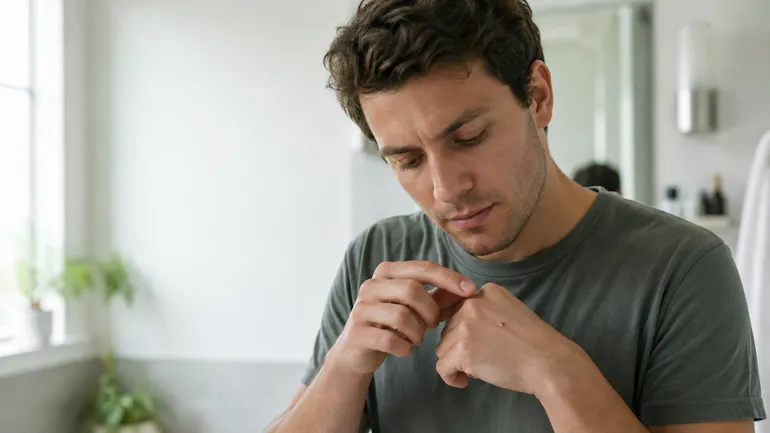
What Causes Warts? Everything You Need to Know
Most people assume a wart appears because they recently caught something. The reality is more complicated.
Many people are exposed to the virus behind warts without ever developing one, while others suddenly notice a wart months after the original exposure. Understanding why helps explain why warts often seem to appear "out of nowhere", why some people get them again and again, and why prevention isn't always as simple as it sounds.
Warts are caused by infection with certain types of the human papillomavirus (HPV). The virus gets in through a tiny break in the skin, and whether it ever becomes a visible wart depends on your immune system, your skin, and a fair amount of chance.
At a glance
| Question | Quick answer |
|---|---|
| What causes warts? | Infection with certain strains of HPV |
| Are they caused by poor hygiene? | No |
| Can stress cause them? | Not directly |
| Why do children get more? | Their immune systems have had less exposure to the virus |
| Why do they suddenly appear? | The virus may already have been present for weeks or months before anything was visible |
| Can they be prevented? | Risk can be reduced, but not removed entirely |
| Can frogs give you warts? | No - this is a myth |
Why do warts suddenly appear?
Most warts don't appear soon after you catch the virus. In fact, by the time you notice one, the exposure may have happened weeks or even months earlier.
That's because there's typically an incubation period between infection and a visible wart forming, ranging from a few weeks to several months. A wart appearing today could be the result of something you were exposed to a long time ago - not necessarily anything recent.
A few things can also act as a trigger that brings a dormant infection to the surface:
- A change in immune function, such as a cold or another period of illness
- Minor injury or repeated friction to the same area of skin
- Increased moisture or sweating in one spot
So if a wart appears "out of nowhere," the truthful answer is often that it wasn't out of nowhere at all - the virus may simply have been present, quietly, for some time before conditions allowed it to become visible. That's also why it's rarely worth trying to pin down exactly where a wart "came from" - the timeline doesn't usually work the way most people assume.
What causes warts?
Warts are caused by HPV entering the skin through a tiny break - something so small you'd never notice it happening. People with eczema, frequently wet or washed hands, cracked skin, or a habit of nail biting or picking at cuticles often have a weaker skin barrier in that spot, which makes it easier for the virus to get in.
Exposure to HPV → virus enters through a tiny break in the skin → skin cells multiply faster than normal → a visible wart develops
A wart usually develops because:
- You were exposed to HPV
- The virus entered through a tiny break in your skin
- Your immune system didn't clear it immediately
- The infected skin cells gradually multiplied enough to become visible
Miss any one of these, and a wart never forms - which is exactly why exposure to the virus is so common, but actually developing a wart is much less so.
There isn't a single "wart virus" - HPV is a large family of related viruses, and different strains favour different parts of the body, with a separate group of strains causing genital warts (outside the scope of this article). Verrucas are simply warts on the soles of the feet, where pressure from standing and walking pushes the growth inward rather than outward.
Does having a wart mean I have HPV?
Yes, technically - but there's no stigma attached to that. The HPV strains that cause common warts and verrucas are entirely different from the strains linked to genital HPV, and almost everyone encounters some form of HPV at some point in their life without any lasting consequence. This isn't unusual or embarrassing - wart-causing HPV is extremely common, and a wart on your hand or foot says nothing about your general health or anything else.
Can you catch HPV and never know it?
Yes - in fact, that's probably what happens most of the time. Many people are exposed to wart-causing HPV without ever developing a visible wart, because their immune system clears the infection before it becomes noticeable. Catching the virus and developing a wart are two different things, and the first is far more common than the second.
How do people catch the virus?
HPV spreads when virus-containing skin cells come into contact with another person's skin, or a surface that someone else later touches. Common routes include:
- Touching someone else's wart directly
- Walking barefoot on communal floors - swimming pool sides, changing rooms, gym showers
- Sharing towels, flannels, socks, shoes, or nail tools
- Shaving over skin near an existing wart
Damaged or damp skin makes infection more likely, because it gives the virus an easier way in - which is part of why verrucas are so strongly linked to swimming pools and changing rooms.
Exposure itself is common: most adults come into contact with wart-causing HPV strains at some point, often more than once. Actually developing a wart is far less common than the exposure itself, which is why two people can share a shower mat or a towel and only one of them ends up with a wart months later.
Why do some people get warts while others never do?
Not everyone who is exposed develops a wart. What happens next depends on several things working together:
Immune response. Some immune systems clear the virus quickly, before it ever causes a visible change. Others take longer, allowing time for a wart to form.
Skin barrier. Healthy, intact skin is naturally more resistant. Skin that's dry, cracked, or frequently irritated gives the virus more opportunities to take hold.
Previous exposure. Prior contact with a similar strain can leave some immune memory, which may reduce (though not eliminate) the chance of a repeat infection.
Age. Children and teenagers tend to get more warts, largely because their immune systems haven't yet encountered many of these strains.
Chance. Even if two people are exposed to the same virus in the same environment, one may develop a wart while the other never does - down to exactly how much virus was transferred, where it landed, and the state of the skin at that moment.
A large proportion of people carry wart-causing HPV strains without ever developing one themselves. Having a wart doesn't mean something is wrong with you, and this can change over a lifetime: someone who never had a wart as a child might develop one as an adult after a period of illness or unusually dry, cracked skin, without anything being fundamentally different about them.
Some people also seem to develop several warts rather than just one. This tends to reflect the same factors - a slower immune response to that particular strain, skin conditions such as eczema that make the skin barrier easier to breach, and simple repeated exposure - rather than any single, identifiable cause.
Why do warts appear in some places but not others?
Hands and fingers are exposed to more everyday contact and minor damage - from nail biting, shaving, or simply touching shared surfaces - which is why they're a common site for warts. Feet, by contrast, spend most of the day under pressure and often in warm, damp conditions inside shoes or at swimming pools, which is why verrucas are so common on the soles. Both come down to the same combination: opportunity for exposure, plus a bit of skin damage or moisture, in one particular spot.
Why are children more likely to get warts?
Children and teenagers get warts more often than adults, and it's almost never anything to do with cleanliness or care. It comes down to developing immunity, close contact at school, communal swimming areas, and the everyday minor skin damage that comes with being a child.
If your child keeps getting warts, our complete guide to children's warts covers age-specific advice on when to treat and when to leave a wart alone.
Can stress cause warts?
No. Stress does not cause HPV infection.
Prolonged stress can influence immune function generally, which may in theory make it slightly easier for an existing exposure to develop into a visible wart. But the evidence connecting stress specifically to wart formation is limited, and stress alone doesn't create the virus.
Can poor hygiene cause warts?
No. Warts aren't a sign of being unclean.
They're caused by direct virus exposure and small breaks in the skin - not by how well that skin is washed. You can moisturise and wash diligently and still develop a wart, and you can be lax about it and never develop one. The habits that actually matter are about reducing exposure to the virus (not sharing nail tools or towels, wearing sandals in communal wet areas), which is a different thing from hygiene in the everyday sense.
Can frogs or toads give you warts?
No. This is a long-standing myth. Warts are caused exclusively by HPV, a virus that only infects human skin - frogs and toads don't carry it.
Can you catch a wart from yourself?
Yes. This is called autoinoculation - the spread of the virus from one part of your own skin to another, usually through picking, scratching, or shaving near an existing wart. It's one of the more common reasons a single wart turns into several.
Why do I keep getting warts?
There are several possible reasons recurring warts happen: virus left behind after a wart appears to have cleared, autoinoculation to other areas, repeated exposure in your daily environment, or an immune system that's simply slower to build resistance to that particular strain. If this sounds familiar, our guide on why warts come back looks at recurrence in more depth and what you can do about it.
Can you prevent warts?
You can meaningfully reduce your risk, though not eliminate it:
- Don't pick or scratch existing warts
- Don't share nail files, towels, or footwear
- Wear sandals in communal showers and pool areas
When should you ask a pharmacist or GP?
Most warts are harmless and can be left alone or treated with standard over-the-counter options. It's worth getting a wart checked if it's changing shape, colour, or size, bleeding, appears on the face or genitals, you're unsure it's a wart, or you have diabetes, poor circulation, or a weakened immune system.
For treatment options once you've confirmed what you're dealing with, learn how to get rid of a wart safely.
Frequently asked questions
What virus causes warts?
Certain strains of the human papillomavirus (HPV) cause common warts and verrucas - different strains to those associated with genital warts.
Why do I suddenly have a wart?
Warts often have an incubation period of weeks to months, so a wart that seems to appear suddenly may be the result of an exposure that happened some time earlier.
Does having a wart mean I have HPV?
Yes, technically, but this is common and not linked to genital HPV or any wider health issue.
Can you catch HPV and never know it?
Yes - this is probably what happens most of the time, as many people's immune systems clear the virus before a wart ever forms.
Can you catch HPV from touching everyday objects?
Yes, it's possible if a surface - a towel, a shower floor, a shared nail file - carries the virus and it reaches a break in your skin, though exposure like this is far more common than actually developing a wart.
Why do children get more warts?
Their immune systems haven't yet encountered most HPV strains, and school and swimming environments involve frequent close contact.
Can stress cause warts?
Not directly. Stress doesn't create the virus, though it may influence immune function.
Can poor hygiene cause warts?
No. Warts are caused by virus exposure and skin damage, not by cleanliness.
Do frogs cause warts?
No, this is a myth. Warts are caused only by HPV.
Can you prevent warts?
You can reduce the risk with sensible precautions, but you can't eliminate it entirely.
Why do some people never get warts?
Differences in immune response, skin condition, and simple chance mean some people clear HPV exposure before it ever becomes visible.
Can touching a wart give me one?
It's possible, since direct contact is one of the main ways the virus spreads, though not everyone who touches a wart develops one.
How long after catching HPV do warts appear?
Typically a few weeks to several months, though this varies considerably between individuals.
Can one wart spread to others on my body?
Yes - this is called autoinoculation, and it usually happens through picking, scratching, or shaving near an existing wart.
